Introduction: Understanding Your IPTV Subscription in 2026

The digital entertainment landscape in 2026 is more dynamic and diverse than ever before. Traditional television broadcasting has largely given way to a world dominated by streaming, and at the forefront of this evolution is Internet Protocol Television (IPTV). For many households, an IPTV subscription has become the primary gateway to a vast universe of content, offering unparalleled flexibility and choice. This guide is designed to navigate the complexities of IPTV in its current state, ensuring you make informed decisions.
As technology advances at an incredible pace, so too do the features, capabilities, and considerations surrounding your digital viewing experience. From ultra-high-definition streaming to AI-driven content recommendations, understanding your IPTV options is crucial. This comprehensive article will delve into every aspect of securing and optimizing an IPTV service 2026, ensuring you harness its full potential while avoiding common pitfalls.
What is IPTV and Its Relevance in 2026?
IPTV, or Internet Protocol Television, is a system through which television services are delivered using the Internet protocol suite over a packet-switched network such as a LAN or the internet, instead of traditional terrestrial, satellite signal, and cable television formats. In 2026, IPTV has matured significantly, moving beyond basic streaming to offer highly integrated, interactive, and personalized viewing experiences. It’s no longer just about live TV; it encompasses Video-on-Demand (VOD), time-shifted TV, and a wealth of interactive features.
Its relevance in 2026 stems from its ability to offer unparalleled customization, global content access, and superior quality compared to older broadcast methods. With the widespread adoption of high-speed internet, including 5G and fiber optics, IPTV can deliver resolutions up to 8K, immersive audio, and a truly on-demand library that caters to every niche interest. A robust Best Iptv 2026 subscription means access to entertainment anytime, anywhere, on almost any device.
The Shift from Traditional Broadcast to Digital Streaming
The transition from traditional linear broadcast television to digital streaming has been a monumental shift, accelerating dramatically in the past decade. In 2026, most consumers expect to choose what they watch, when they watch it, and on what device. This consumer-centric demand has fueled the growth of IPTV, making static channel lineups and scheduled programming feel increasingly outdated. The move away from large satellite dishes and coaxial cables to a purely internet-driven delivery system offers greater efficiency, lower infrastructure costs for providers, and ultimately, more choice for the end-user.
This shift has also enabled a new era of content creation and distribution, democratizing access for independent creators and allowing niche content to find its audience globally. The flexibility offered by an IPTV subscription allows viewers to curate their own entertainment bundles, often at a lower cost than traditional cable packages, which frequently include channels they never watch. The ability to pause live TV, restart shows, and access extensive VOD libraries has cemented digital streaming as the dominant form of media consumption.
What This Comprehensive Guide Covers
This guide is meticulously structured to provide you with a holistic understanding of the IPTV landscape in 2026. We will begin by exploring the cutting-edge technology and services that define the modern IPTV experience, from advanced codecs to AI-driven personalization. Following this, we will delve into the critical factors you need to consider when selecting an IPTV provider, ensuring you find a service that perfectly aligns with your viewing habits and budget.
Furthermore, we will demystify pricing models, highlight potential hidden costs, and offer strategies for finding the best value for your Iptv Provider Guide 2026. A significant portion will be dedicated to distinguishing between legal and illegitimate services, emphasizing the importance of security and consumer protection. We’ll also provide practical advice on optimizing your home setup for peak IPTV performance and look ahead at the exciting future trends shaping this dynamic industry. Our goal is to empower you to make an informed decision regarding your next IPTV subscription.
The Evolving Landscape of IPTV Technology and Services

The technological backbone of IPTV is constantly evolving, driven by the relentless pursuit of higher quality, lower latency, and more efficient content delivery. In 2026, we are witnessing significant advancements that are reshaping how content is encoded, transmitted, and consumed. These innovations are not just incremental improvements; they represent fundamental shifts that enhance the user experience and expand the capabilities of an IPTV subscription.
The convergence of faster internet infrastructure, more powerful processing in client devices, and sophisticated server-side technologies is creating an environment where IPTV can truly shine. Understanding these underlying technologies is key to appreciating the quality and reliability of modern IPTV services and making the most of your investment in an IPTV service 2026.
Next-Gen Codecs and Streaming Protocols for Superior Quality
The quality of your IPTV experience is heavily reliant on the codecs and streaming protocols employed by providers. In 2026, the industry has largely moved beyond older standards like H.264, embracing more efficient codecs such as AV1 (AOMedia Video 1) and the emerging VVC (Versatile Video Coding or H.266). These next-generation codecs offer significantly better compression ratios, meaning higher video quality at lower bitrates, which translates to less bandwidth consumption and smoother streaming, especially for 4K and 8K content.
Alongside advanced codecs, streaming protocols have also seen major enhancements. While HTTP-based adaptive streaming protocols like HLS (HTTP Live Streaming) and DASH (Dynamic Adaptive Streaming over HTTP) remain prevalent, newer protocols are gaining traction for specific applications. For instance, SRT (Secure Reliable Transport) is increasingly used by broadcasters and content distributors for low-latency, high-quality contributions, ensuring that live events reach your screen with minimal delay. WebRTC (Web Real-Time Communication) is also being explored for highly interactive and ultra-low-latency scenarios, pushing the boundaries of what an IPTV subscription can offer in terms of real-time engagement.
AI-Powered Personalization and Recommendation Engines
Artificial Intelligence (AI) has become an indispensable component of modern IPTV services, particularly in the realm of personalization and content discovery. In 2026, AI-powered recommendation engines are far more sophisticated than ever before, moving beyond simple genre matching to analyze nuanced viewing habits, time of day, device usage, and even emotional responses to content. These engines learn your preferences over time, suggesting not just what you might like, but also introducing you to new content that aligns with your evolving tastes.
Beyond recommendations, AI is also being utilized for dynamic content curation, tailoring channel lineups, and even generating personalized ad experiences that are less intrusive and more relevant. Some advanced IPTV platforms are experimenting with AI to enhance accessibility features, such as real-time language translation for subtitles or even personalized dubbing. This level of personalization elevates the value proposition of an IPTV subscription, making the vast content libraries feel manageable and incredibly relevant to each individual user.
Regulatory Environment and Consumer Protections in the IPTV Sector
As IPTV grows, so does the need for a robust regulatory framework to ensure consumer protection and fair competition. In 2026, many regions have established or updated regulations to address issues unique to digital streaming. These include rules around data privacy (e.g., enhanced GDPR and CCPA standards), content licensing, geo-blocking practices, and service quality guarantees. Consumers benefit from clearer terms of service, transparent pricing, and defined avenues for dispute resolution, particularly when dealing with cross-border IPTV service 2026 providers.
Governments and international bodies are also working to combat piracy and protect intellectual property rights, leading to stricter enforcement against illegal IPTV operations. Legitimate IPTV providers often adhere to industry best practices and certifications, offering a level of security and reliability that unlicensed services cannot match. When considering an IPTV subscription, it’s prudent to choose providers that demonstrate compliance with these regulations, safeguarding your personal data and ensuring a reliable, legal viewing experience.
Global Market Trends and Growth Projections for IPTV by 2030
The global IPTV market is experiencing robust growth, with projections indicating continued expansion through 2030. In 2026, market analysis points to a significant increase in subscriber numbers, particularly in emerging economies where high-speed internet infrastructure is rapidly expanding. Key drivers include the ongoing cord-cutting trend, the demand for diverse and international content, and the integration of IPTV services with other smart home technologies.
Analysts predict the market size for IPTV will reach hundreds of billions of dollars globally by the end of the decade, with a compound annual growth rate (CAGR) that underscores its momentum. Innovations in 5G connectivity, satellite internet, and edge computing are expected to further accelerate this growth, making high-quality IPTV accessible to even more remote populations. The competitive landscape is also evolving, with traditional telecom companies, media conglomerates, and tech giants all vying for a share of the burgeoning IPTV subscription market, driving innovation and offering consumers an ever-wider array of choices.
Key Factors When Choosing an IPTV Subscription Provider
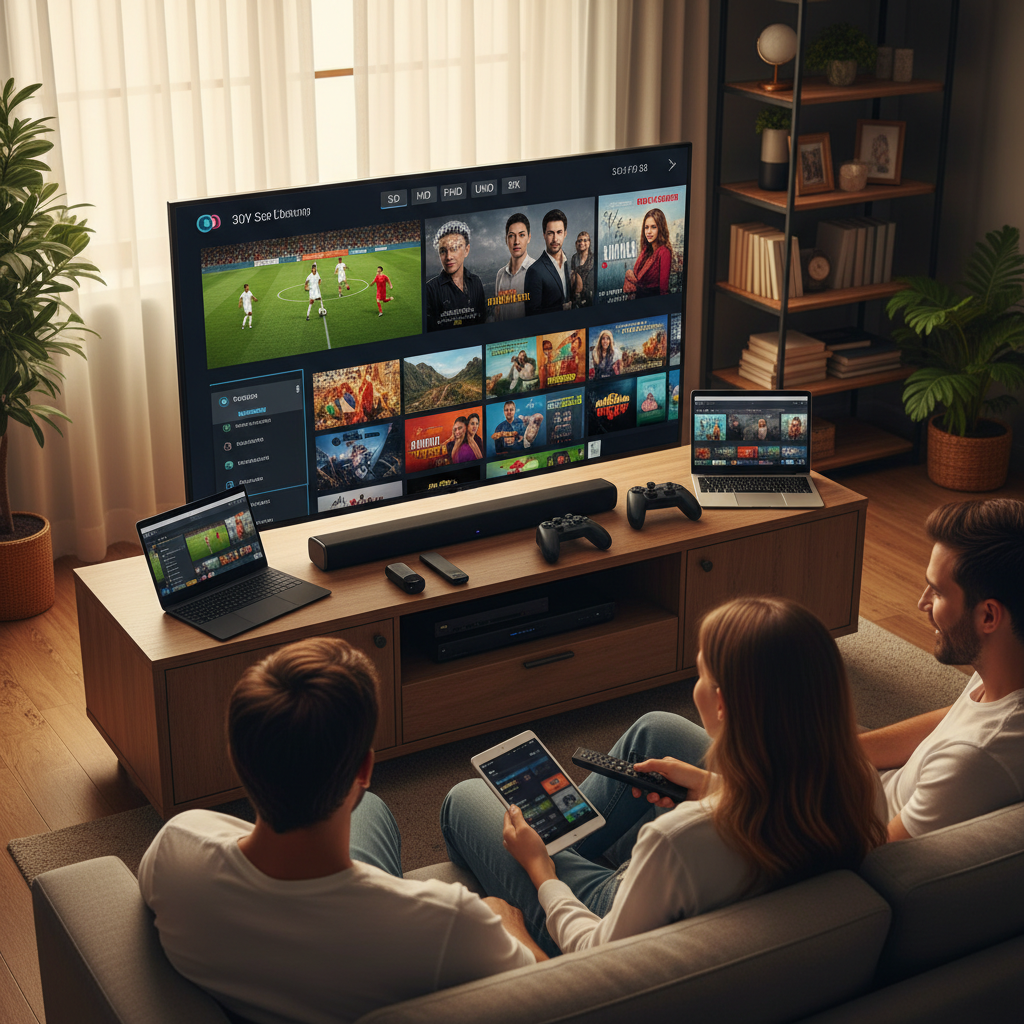
Selecting the right IPTV subscription provider in 2026 can be a daunting task, given the sheer number of options available. To ensure you make an informed decision that aligns with your specific needs and preferences, it’s crucial to evaluate several key factors. These considerations go beyond just price, delving into the core aspects of content, performance, compatibility, and user experience. A thorough assessment will help you avoid disappointment and secure an Best Iptv 2026 service that truly delivers value.
Taking the time to research and compare providers based on these criteria will save you frustration in the long run. Remember, an IPTV subscription is an investment in your entertainment, and like any investment, due diligence is paramount. Let’s explore the essential elements to consider before committing to a provider.
Content Library and Channel Diversity (Live TV, VOD, Sports, International)
The content offering is arguably the most critical factor when choosing an IPTV subscription. In 2026, expect providers to boast extensive libraries, but the true value lies in the diversity and relevance of that content to your viewing habits. Consider the following:
- Live TV: Does the provider offer a comprehensive selection of channels from your region, including local news, major networks, and popular cable channels? How many international channels are available if that’s a priority?
- Video-on-Demand (VOD): What kind of movies and TV show libraries are offered? Are they regularly updated with new releases? Do they include popular series and classic films?
- Sports: For sports enthusiasts, access to major league games, international tournaments, and specialized sports channels is non-negotiable. Check if the provider has the necessary licensing to broadcast your favorite sports legally.
- International Content: If you’re interested in programming from specific countries or languages, verify the availability and depth of their international channel packages.
A good IPTV subscription should cater to a broad range of interests, offering a balance of live, on-demand, and niche content.
Streaming Quality and Reliability Benchmarks (SD, HD, FHD, UHD, 8K)
The quality and reliability of the stream are paramount for an enjoyable IPTV experience. In 2026, anything less than consistent HD (720p) for standard viewing is often considered subpar, with most users expecting Full HD (1080p) as the baseline. For premium content, Ultra HD (4K) is now standard, and some providers are even beginning to offer limited 8K content, though this requires significant bandwidth and compatible hardware.
When evaluating providers, look for:
- Resolution Support: Clearly advertised support for HD, FHD, UHD, and potentially 8K content.
- Consistent Bitrates: High bitrates for a sharper image and better color fidelity.
- Minimal Buffering: A reliable service should offer smooth playback with infrequent buffering, even during peak usage times.
- Server Uptime: High server uptime indicates a stable service with minimal interruptions. Read reviews about service stability, especially during live events.
A trial period can be invaluable for testing the actual streaming quality and reliability of a potential iptv subscription before committing long-term.
Device Compatibility and Multi-Device Support (Smart TVs, Streaming Sticks, Mobile, Consoles)
Modern consumers use a multitude of devices for entertainment, and your IPTV subscription should seamlessly integrate with your existing ecosystem. In 2026, expect broad compatibility across various platforms. Key considerations include:
- Smart TVs: Does the service have a native app for popular Smart TV operating systems like Google TV, Samsung Tizen, LG webOS, or Roku TV?
- Streaming Sticks/Boxes: Compatibility with devices like Amazon Fire TV Stick, Roku, Apple TV, Chromecast with Google TV, and NVIDIA Shield is essential for many users.
- Mobile Devices: Dedicated and well-optimized apps for iOS and Android smartphones and tablets are a must for on-the-go viewing.
- Gaming Consoles: Some providers may offer apps for PlayStation or Xbox, expanding your viewing options.
- Web Browsers: A functional web player is crucial for watching content on laptops and desktops without installing additional software.
Also, inquire about multi-device support – how many concurrent streams are allowed per Iptv Provider Guide 2026? This is vital for households with multiple viewers or those who want to watch on different devices simultaneously.
User Interface (UI) and Overall User Experience
An intuitive and aesthetically pleasing user interface (UI) significantly enhances the overall user experience (UX) of an IPTV subscription. A clunky, slow, or poorly organized interface can quickly detract from even the best content library. In 2026, users expect modern, responsive UIs with easy navigation and powerful search capabilities.
Look for providers that offer:
- Intuitive Navigation: Can you easily find channels, VOD content, and settings?
- Fast Loading Times: Channels and menus should load quickly without frustrating delays.
- Personalization Features: Options for creating watchlists, favorites, and personalized profiles for different family members.
- Search Functionality: Robust search with filters (genre, year, actor) to quickly locate specific content.
- EPG (Electronic Program Guide): A clear, comprehensive, and easy-to-read EPG for live TV scheduling.
A well-designed UI/UX makes the entire process of finding and enjoying content a pleasure, making your IPTV subscription feel more premium and user-friendly.
Customer Support and Service Level Agreements (SLAs)
Even with the most reliable IPTV subscription, issues can arise. Excellent customer support is invaluable for resolving problems quickly and efficiently. Before committing, investigate the provider’s support options and reputation. In 2026, expect multiple channels for assistance.
Consider:
- Availability: Is support available 24/7, or only during business hours?
- Contact Methods: Do they offer live chat, email, phone support, or a ticketing system?
- Response Time: How quickly do they typically respond to inquiries?
- Knowledge Base: Is there a comprehensive FAQ section or knowledge base where you can find answers to common questions yourself?
- Language Support: If you require support in a language other than English, verify its availability.
For business or critical users, understanding the Service Level Agreements (SLAs) – which define guaranteed uptime, response times, and compensation for service disruptions – can be particularly important. A provider with a strong commitment to customer satisfaction reflects a trustworthy and dependable iptv subscription.
Navigating Pricing Models and Finding Value in Your IPTV Subscription
The pricing landscape for IPTV subscriptions in 2026 is diverse, ranging from basic, budget-friendly packages to premium, feature-rich bundles. Understanding these various pricing models and being aware of potential hidden costs is crucial for finding true value. It’s not just about the monthly fee; it’s about what you get for that fee and any additional expenses that might arise. A savvy consumer will look beyond the advertised price to assess the overall cost-effectiveness of an iptv subscription.
This section will equip you with the knowledge to dissect different pricing structures, leverage trials, and identify the best deals, ensuring your digital entertainment budget is spent wisely. Finding value means balancing cost with the quality, quantity, and reliability of the service you receive.
Understanding Different Subscription Tiers and Packages
IPTV providers in 2026 typically offer a range of subscription tiers and packages designed to cater to different user needs. These tiers are often structured to provide varying levels of content access, streaming quality, and concurrent streams. Common packages include:
- Basic/Entry-Level: Offers a core selection of channels and VOD content, usually in HD, with limited concurrent streams. Ideal for single users or those with basic viewing habits.
- Standard/Family: Expands on the basic package with more channels, a larger VOD library, Full HD (1080p) streaming, and increased concurrent streams (e.g., 2-4).
- Premium/Pro: Provides the most extensive content library, including specialized sports, international channels, and access to 4K/8K content. Often includes the highest number of concurrent streams and premium features like cloud DVR.
- Niche Add-ons: Many providers allow you to customize your iptv subscription with add-ons for specific sports packages, international language channels, or premium movie channels.
Carefully evaluate what each tier offers in relation to your viewing habits. Paying for channels you never watch is a waste, but missing out on essential content due to a cheaper tier can also lead to dissatisfaction.
Hidden Costs, Data Caps, and International Access Fees
While the advertised monthly fee for an IPTV subscription might seem straightforward, it’s essential to be aware of potential hidden costs that can inflate your bill. These can include:
- Activation/Setup Fees: Some providers charge a one-time fee to set up your account.
- Device Rentals/Purchases: If you need proprietary hardware (e.g., a specific set-top box), there might be rental fees or an upfront purchase cost.
- Transaction Fees: International payments or specific payment methods might incur small processing fees.
- Data Caps: While less common in 2026 due to widespread unlimited internet, some ISPs still impose data caps. High-quality IPTV streaming, especially 4K/8K, consumes significant bandwidth, potentially leading to overage charges if you exceed your cap.
- International Access Fees/Geo-restrictions: Some content or services might be geo-restricted, requiring a VPN (an additional cost) or incurring special international access fees if offered by the provider.
Always read the fine print of your iptv subscription terms and conditions, and clarify any potential extra charges with customer support before signing up. For more details on avoiding these pitfalls, refer to our Iptv Provider Guide 2026.
The Benefits of Free Trials and Short-Term Plans
Free trials and short-term plans are invaluable tools for evaluating an IPTV subscription before making a long-term commitment. In 2026, most reputable providers offer a trial period, typically ranging from 24 hours to 7 days. This allows you to:
- Test Streaming Quality: Assess the actual resolution, buffering frequency, and overall reliability on your devices and internet connection.
- Explore Content: Verify if the content library, specific channels, and VOD options meet your expectations.
- Evaluate UI/UX: Experience the user interface firsthand to ensure it’s intuitive and enjoyable to use.
- Check Device Compatibility: Confirm that the service works seamlessly across all your preferred streaming devices.
- Assess Customer Support: If you encounter any issues during the trial, it’s a good opportunity to test the responsiveness and helpfulness of their support team.
Short-term plans (e.g., monthly subscriptions) offer similar flexibility, allowing you to switch providers if you’re not satisfied, albeit at a slightly higher monthly cost compared to annual plans. Always remember to cancel trials before they auto-renew if you decide not to proceed with the iptv subscription.
Strategies for Identifying the Best IPTV Subscription Deals and Discounts
Finding the best deals for your IPTV subscription requires a bit of strategic thinking and patience. Providers frequently offer promotions, especially during holidays or at the start of major sports seasons. Here are some strategies for identifying value:
- Annual vs. Monthly Plans: Annual subscriptions almost always offer a significant discount over monthly payments. If you’re confident in a provider after a trial, an annual plan can save you a substantial amount.
- Bundles: Some providers may offer bundles with other services (e.g., VPNs, cloud storage) or multi-service discounts if they also provide internet or mobile services.
- Referral Programs: Check if current subscribers can refer new customers for discounts for both parties.
- Seasonal Promotions: Keep an eye out for Black Friday, Cyber Monday, New Year’s, or specific sports event promotions, which often feature deep discounts.
- Negotiation: While less common with smaller IPTV providers, larger services might be open to negotiation, especially if you’re a long-term customer or considering switching from a competitor.
Always compare the “per month” cost across different plan durations and providers. The cheapest upfront iptv subscription might not always be the best value if it lacks essential features or reliability.
Legal vs. Illegitimate IPTV: Securing Your Digital Entertainment
In the vibrant and rapidly expanding world of IPTV, a critical distinction must be made between legal, licensed services and illegitimate, unauthorized offerings. While both may provide access to a wide array of content, the risks associated with illegal IPTV can far outweigh any perceived cost savings. In 2026, regulatory bodies and content owners are more vigilant than ever, making it imperative for consumers to understand the implications of their choices. Securing your digital entertainment means choosing a legitimate iptv subscription.
This section will guide you through identifying reputable providers, understanding the dangers of unlicensed services, navigating copyright laws, and leveraging tools like VPNs to protect your legitimate IPTV experience. Prioritizing legality and security is paramount for a safe and enjoyable streaming journey.
Identifying Licensed and Reputable IPTV Providers
Distinguishing between legitimate and illegitimate IPTV providers is crucial for a secure and ethical streaming experience. Licensed providers operate within the bounds of copyright law, securing proper distribution rights for the content they offer. In 2026, several indicators can help you identify a reputable iptv subscription:
- Clear Licensing Information: Reputable providers will often display information about their content partners, broadcasting licenses, or compliance with digital rights management (DRM) standards.
- Transparent Pricing and Terms: Legitimate services have clear pricing structures, detailed terms of service, and privacy policies. They won’t promise an impossibly low price for an unrealistic amount of content.
- Professional Website and Support: A well-designed, functional website, professional branding, and accessible customer support channels are hallmarks of a trustworthy provider.
- Payment Methods: They typically accept standard payment methods like credit cards or PayPal, rather than relying solely on cryptocurrencies or obscure payment gateways.
- Content Consistency: Licensed services offer a consistent and reliable content lineup. Unlicensed services often have channels that frequently go offline or disappear without notice due to legal takedowns.
Always exercise caution if a deal seems too good to be true, especially for premium content that is typically expensive to license.
The Risks of Unlicensed Services (Malware, Data Breaches, Legal Action)
While illegal IPTV services may tempt users with low prices and vast content libraries, they come with significant and often severe risks. Opting for an unlicensed iptv subscription can expose you to:
- Malware and Viruses: Unlicensed apps or clients often contain hidden malware, spyware, or ransomware that can compromise your device, steal personal data, or even demand payment to unlock your files.
- Data Breaches: Payment information and personal details provided to illegal services are at high risk of being stolen and exploited by cybercriminals, as these providers typically lack robust security measures.
- Legal Action: In many jurisdictions, both the distribution and consumption of unauthorized copyrighted content are illegal. While enforcement primarily targets providers, users can face fines or even prosecution, especially if they are found to be actively participating in distribution.
- Poor Service Quality: Unlicensed services are inherently unstable, with frequent buffering, channel outages, and sudden shutdowns due to legal pressure, leading to a frustrating viewing experience.
- Lack of Support: When issues arise, there is no reliable customer support, leaving you without recourse for technical problems or payment disputes.
The short-term savings from an illegal IPTV subscription are rarely worth the long-term risks to your security, privacy, and legal standing.
Understanding Copyright and Intellectual Property Laws in 2026
Copyright and intellectual property (IP) laws are the foundation of legal content distribution, and they are rigorously enforced in 2026. These laws grant creators and rights holders exclusive control over their original works, including movies, TV shows, and live broadcasts. IPTV providers must obtain proper licenses from these rights holders to legally stream content. Without these licenses, they are engaging in copyright infringement.
Key aspects of IP law relevant to IPTV include:
- Digital Millennium Copyright Act (DMCA): In the U.S., the DMCA provides a framework for copyright holders to issue takedown notices for infringing content. Similar laws exist globally.
- Geo-blocking: Licensing agreements often include geographical restrictions, meaning content might only be licensed for distribution in specific regions. Legitimate providers respect these boundaries.
- Anti-Piracy Efforts: Industry bodies and law enforcement agencies are continually developing sophisticated methods to track and shut down illegal IPTV operations, often working with ISPs to identify infringing users.
As a consumer, understanding these laws helps you appreciate the value of a legitimate iptv subscription and the risks associated with supporting illegal enterprises. For a deeper dive into content rights, consult resources like Wikipedia’s article on Copyright Law.
Protecting Your IPTV Subscription with a VPN
While a VPN (Virtual Private Network) cannot make an illegal IPTV service legal, it is an essential tool for protecting your privacy and enhancing your experience with a legitimate IPTV subscription. In 2026, VPNs offer several benefits:
- Privacy Protection: A VPN encrypts your internet traffic, preventing your Internet Service Provider (ISP) or other third parties from monitoring your online activities, including your streaming habits.
- ISP Throttling Prevention: Some ISPs may throttle (slow down) internet speeds for specific activities like streaming during peak hours. A VPN can mask your activity, potentially circumventing this throttling and ensuring consistent speed for your iptv subscription.
- Geo-unblocking (for licensed content): For legitimate services, a VPN can allow you to access content that is geo-restricted to certain regions, provided you have a valid subscription in that region. For example, if you’re traveling abroad, you might use a VPN to access your home country’s licensed IPTV service.
- Enhanced Security: By routing your traffic through a secure, encrypted server, a VPN adds an extra layer of security, particularly when using public Wi-Fi networks.
When choosing a VPN, look for one with a strict no-logs policy, fast servers, and a wide global network to ensure optimal performance with your IPTV subscription. For more on optimizing your streaming, check out our guide on Iptv Encoder Box related infrastructure, which often benefits from a stable network connection.
Optimizing Your IPTV Experience for Peak Performance
Having a great IPTV subscription is only one part of the equation; optimizing your home setup is equally crucial for achieving peak streaming performance. In 2026, with the advent of 4K and 8K content becoming more prevalent, along with immersive audio formats, your internet speed, hardware, and network configuration play a significant role in determining the quality and fluidity of your viewing experience. Don’t let technical bottlenecks hinder your enjoyment of a premium iptv subscription.
This section will provide practical advice on ensuring your internet connection is up to the task, recommending the latest hardware, troubleshooting common issues, and leveraging advanced settings to fine-tune your IPTV setup for unparalleled performance. A little effort in optimization can make a world of difference.
Internet Speed and Bandwidth Requirements for 4K/8K Streaming
The foundation of any high-quality IPTV experience is a robust and fast internet connection. In 2026, as 4K (Ultra HD) content becomes standard and 8K begins to emerge, the bandwidth requirements have significantly increased. While standard definition (SD) might only need 3-5 Mbps, and Full HD (1080p) around 5-8 Mbps, the demands for higher resolutions are substantial:
- 4K (UHD) Streaming: Typically requires a minimum sustained download speed of 25 Mbps, though 30-50 Mbps is recommended for a buffer-free experience, especially if other devices are using the network.
- 8K Streaming: For cutting-edge 8K content, you’ll need at least 50-80 Mbps, with 100 Mbps or more being ideal to handle the massive data streams without interruption.
It’s important to remember that these are minimums for a single stream. If multiple users in your household are streaming, gaming, or working online simultaneously, your overall internet plan should accommodate this combined demand. Fiber optic connections and high-speed cable internet are best suited for these requirements. You can test your current speed using online tools to see if it meets the demands of your desired iptv subscription.
Recommended Hardware: Streaming Devices, Routers, and Displays
To fully capitalize on your IPTV subscription, investing in the right hardware is essential. In 2026, technology has advanced significantly, offering powerful and efficient devices:
- Streaming Devices:
- Premium Boxes: Devices like the latest Apple TV 4K, NVIDIA Shield TV Pro, or high-end Roku Ultra offer powerful processors, ample RAM, support for the newest codecs (AV1, VVC), and compatibility with advanced audio formats (Dolby Atmos, DTS:X). These are ideal for 4K/8K content.
- Smart TVs: Modern Smart TVs (Google TV, Samsung Tizen, LG webOS) often have built-in IPTV apps and powerful processors, eliminating the need for an external streaming device. Ensure your TV supports the desired resolution and HDR standards (HDR10+, Dolby Vision).
- Routers:
- Wi-Fi 6E/Wi-Fi 7: Upgrade to a router supporting Wi-Fi 6E or the newer Wi-Fi 7 (802.11be) standard. These provide significantly faster speeds, lower latency, and better handling of multiple devices, especially on the less congested 6GHz band.
- Gigabit Ethernet: For the most stable connection, directly connect your primary streaming device to the router via a Gigabit Ethernet cable.
- Displays:
- OLED/Mini-LED TVs: For the best visual experience, OLED or Mini-LED displays offer superior contrast, black levels, and vibrant colors, making 4K/8K content from your Best Iptv 2026 truly shine.
- HDMI 2.1: Ensure your display and streaming device both support HDMI 2.1 for full 4K@120Hz or 8K@60Hz capabilities.
Proper hardware ensures that your internet speed isn’t bottlenecked and that you can enjoy the highest possible quality from your iptv subscription.
Troubleshooting Common IPTV Playback and Connectivity Issues
Even with optimal setup, occasional issues can arise with your IPTV subscription. Knowing how to troubleshoot common problems can quickly restore your viewing pleasure. Here are some frequent issues and their solutions:
- Buffering/Freezing:
- Check Internet Speed: Run a speed test. If it’s low, restart your router/modem.
- Reduce Network Congestion: Disconnect other devices, or pause downloads.
- Use Wired Connection: Ethernet is more stable than Wi-Fi.
- Clear Cache: On your streaming device, clear the cache of the IPTV app.
- Switch Servers/Channels: The issue might be on the provider’s end; try a different stream or channel.
- “Channel Not Available” / Black Screen:
- Check Subscription Status: Ensure your iptv subscription is active and not expired.
- Restart App/Device: A simple restart often resolves temporary glitches.
- VPN Issues: If using a VPN, try a different server or temporarily disable it to see if it’s causing geo-blocking conflicts.
- Provider Issue: Sometimes the channel is temporarily down on the provider’s side; check their status page or contact support.
- Login Problems:
- Verify Credentials: Double-check your username and password for typos.
- Reset Password: Use the provider’s password reset function.
- Check for Account Suspension: Contact support if you suspect your account might be suspended.
- Audio/Video Sync Issues:
- Restart Stream/Device: Often a temporary glitch.
- Adjust Device Settings: Check your streaming device or TV’s audio delay settings.
- Update App/Firmware: Ensure your IPTV app and device firmware are up to date.
Many issues can be resolved with basic troubleshooting. If problems persist, contacting your IPTV provider’s support is the next step.
Advanced Settings and Customization Options for Enhanced Viewing
Beyond basic setup, many IPTV services and streaming devices offer advanced settings and customization options that can significantly enhance your viewing experience. Taking the time to explore these can fine-tune your IPTV subscription to your exact preferences.
Look for options such as:
- Buffer Size: Some IPTV apps allow you to adjust the buffer size. A larger buffer can help prevent buffering on slower connections but might introduce more latency.
- Video Decoder Settings: Experiment with hardware or software decoding options within the app. Hardware decoding is usually more efficient, but software decoding can sometimes resolve playback issues.
- Audio Passthrough: For home theater systems, enable audio passthrough (e.g., for Dolby Atmos or DTS:X) to send the raw audio stream directly to your AV receiver for the best sound quality.
- Subtitle Customization: Adjust font size, color, background, and position of subtitles for optimal readability.
- EPG Customization: Some apps allow you to hide unwanted channels from the Electronic Program Guide (EPG) or reorder your favorites.
- Parental Controls: Set up PIN-protected access for certain content or channels to manage what younger viewers can watch.
- Aspect Ratio Adjustment: Correctly set the aspect ratio for older content to avoid stretched or distorted images.
Diving into these settings can personalize your IPTV experience, making your iptv subscription feel truly tailored to your home theater setup and viewing habits. For more on the underlying tech, consider researching bandwidth management principles.
The Future of IPTV: Trends and Innovations in 2026 and Beyond
The IPTV landscape is a rapidly evolving frontier, continually shaped by technological advancements and shifting consumer demands. In 2026, we are on the cusp of exciting innovations that promise to redefine how we interact with digital content. These trends are not just about better resolution or more channels; they point towards a more immersive, integrated, and sustainable future for your iptv subscription. Staying abreast of these developments will provide insight into the value and capabilities you can expect from your service in the coming years.
From interactive content to seamless smart home integration and the transformative impact of next-gen connectivity, the future of IPTV is bright and full of potential. Let’s explore the key innovations that will shape our streaming experiences.
Interactive Content and Immersive Viewing Experiences
The passive consumption of content is gradually giving way to more interactive and immersive viewing experiences in 2026. IPTV is at the forefront of this shift, leveraging its digital nature to offer more than just linear playback:
- Interactive Storytelling: Some providers are experimenting with “choose your own adventure” style narratives, allowing viewers to influence plotlines or character decisions.
- Live Polling and Q&A: During live events or talk shows, viewers can participate in real-time polls, submit questions to hosts, or engage in moderated chat rooms directly within the IPTV interface.
- Watch Parties: Integrated watch party features allow friends and family to stream content synchronously, chat, and react together, even when physically apart.
- Augmented Reality (AR) & Virtual Reality (VR) Integration: While still nascent, the future holds potential for AR overlays during sports broadcasts (e.g., real-time player stats on your screen) or even fully immersive VR experiences where you feel like you’re “in” the stadium or concert hall.
These interactive elements promise to make your iptv subscription a more engaging and social experience, moving beyond mere entertainment to active participation.
Integration with Smart Home Ecosystems and Voice AI
The smart home is becoming increasingly interconnected, and IPTV is no exception. In 2026, seamless integration with smart home ecosystems and advanced voice AI is a major trend, simplifying control and enhancing convenience:
- Voice Control: Deep integration with virtual assistants like Google Assistant, Amazon Alexa, and Apple Siri allows users to control their IPTV subscription entirely by voice. This includes changing channels, searching for content, pausing/playing, adjusting volume, and even launching specific apps without touching a remote.
- Unified Control: Your IPTV service can be integrated into broader smart home routines. For example, a “movie night” command could dim the lights, close the blinds, and start your favorite movie on your IPTV app.
- Contextual Awareness: Future systems may leverage smart home sensors to suggest content based on ambient light (e.g., suggest brighter content during the day) or even occupancy (e.g., automatically pause when you leave the room).
This level of integration makes the IPTV experience more fluid and intuitive, embedding it deeper into the fabric of daily life and making your iptv subscription a central hub for home entertainment.
The Impact of 5G and Satellite Internet on IPTV Expansion
The global expansion of high-speed internet infrastructure, particularly 5G mobile networks and advanced satellite internet services, is set to profoundly impact IPTV in 2026 and beyond. These technologies are breaking down geographical barriers and enabling unprecedented levels of accessibility:
- 5G for Home Internet: 5G fixed wireless access (FWA) is providing gigabit-level speeds to homes, offering a viable alternative to traditional fiber or cable. This means high-quality 4K/8K IPTV is accessible in urban and suburban areas without the need for physical cable infrastructure.
- Low-Earth Orbit (LEO) Satellite Internet: Services like Starlink are bringing high-speed, low-latency internet to rural and remote areas that were previously underserved. This opens up the possibility of a premium IPTV subscription for millions who previously had limited or no access to reliable streaming.
- Edge Computing: 5G and LEO satellite networks facilitate edge computing, where content delivery networks (CDNs) can place servers closer to end-users, reducing latency and improving streaming reliability, especially for live events.
These infrastructure advancements are democratizing access to high-quality digital entertainment, ensuring that a premium iptv subscription is no longer confined to densely populated urban centers. For more on the future of connectivity, explore insights from publications like Forbes’ coverage on 5G and Satellite Internet.
Sustainability in Streaming Technology and Eco-Friendly Practices
As digital consumption grows, so does awareness of its environmental footprint. In 2026, sustainability is becoming an increasingly important consideration for the streaming industry, including IPTV. Providers are beginning to adopt more eco-friendly practices:
- Energy-Efficient Data Centers: IPTV relies heavily on data centers. Providers are investing in renewable energy sources, more efficient cooling systems, and optimized server hardware to reduce power consumption.
- Optimized Codecs and Bitrates: The use of next-gen codecs like AV1 and VVC, which deliver high quality at lower bitrates, means less data needs to be transmitted and stored, thus reducing the energy required for network infrastructure.
- Device Longevity and Recyclability: Manufacturers of streaming devices are focusing on creating more durable products with longer lifespans and using recyclable materials, reducing electronic waste.
- “Green” Streaming Modes: Some platforms may offer options for lower-resolution streaming by default, giving users the choice to reduce their energy consumption if ultra-high definition isn’t a priority.
Consumers who prioritize environmental responsibility can increasingly choose IPTV providers that demonstrate a commitment to sustainability, making their iptv subscription not just entertaining, but also eco-conscious.
Conclusion: Making an Informed IPTV Subscription Decision in 2026
Navigating the complex and rapidly evolving world of IPTV in 2026 requires careful consideration and a clear understanding of your priorities. This comprehensive guide has equipped you with the knowledge to make an informed decision, ensuring your digital entertainment experience is not only enjoyable but also secure, reliable, and tailored to your specific needs. The landscape of streaming is continuously innovating, and staying informed is key to maximizing the value of your iptv subscription.
Remember, the best IPTV service is one that seamlessly integrates into your lifestyle, provides the content you desire at the quality you expect, and does so within a legal and secure framework. By applying the insights from this guide, you are well-prepared to embark on a fulfilling and future-proof streaming journey.
Recap of Key Considerations for Your IPTV Journey
To recap, here are the essential factors to weigh when selecting and managing your IPTV subscription in 2026:
- Content is King: Prioritize providers with a diverse library of live TV, VOD, sports, and international channels that align with your interests.
- Quality and Reliability: Demand consistent HD, FHD, or 4K streaming with minimal buffering, backed by robust server infrastructure.
- Device Compatibility: Ensure the service works across all your preferred devices, from Smart TVs to mobile phones, and supports multiple concurrent streams.
- User Experience: Opt for an intuitive user interface, responsive navigation, and comprehensive EPG.
- Pricing and Value: Understand different tiers, watch out for hidden costs, and leverage free trials and discounts to find the best value.
- Legality and Security: Choose licensed providers to avoid malware, data breaches, and legal risks. Use a VPN to protect your privacy.
- Optimization: Ensure your internet speed meets requirements, invest in appropriate hardware (Wi-Fi 7 router, 4K/8K streaming device), and learn basic troubleshooting.
- Future-Proofing: Consider providers that embrace interactive content, smart home integration, and sustainable practices.
Each of these elements contributes to the overall satisfaction and longevity of your IPTV experience.
Final Recommendations for a Seamless Streaming Experience
For a truly seamless and enjoyable IPTV experience in 2026, we offer these final recommendations:
- Do Your Research Thoroughly: Don’t jump at the first offer. Read reviews, compare features, and utilize trial periods extensively.
- Prioritize Legitimate Services: The peace of mind, security, and reliability of a legal IPTV subscription far outweigh any perceived benefits of illicit alternatives.
- Invest in Your Infrastructure: A fast, stable internet connection and modern streaming hardware are foundational to high-quality streaming. Don’t let outdated equipment bottleneck your experience.
- Secure Your Connection: Always use a reputable VPN with your legitimate IPTV service to protect your privacy and prevent ISP throttling.
- Engage with Support: Don’t hesitate to reach out to customer support for any issues or questions. A responsive support team is a sign of a good provider.
By following these guidelines, you can create a personalized and high-performance digital entertainment hub in your home.
Staying Updated with the Ever-Evolving IPTV Market
The world of IPTV is not static; it’s a dynamic and rapidly evolving market. New technologies emerge, content libraries shift, regulations change, and providers constantly update their offerings. To ensure you continue to get the most out of your IPTV subscription, it’s vital to stay updated.
Regularly check industry news, read expert reviews, and revisit guides like this one to keep abreast of the latest trends and innovations. Be open to re-evaluating your provider periodically, especially if your needs change or if new, more compelling services enter the market. By remaining informed and proactive, you can ensure your iptv subscription consistently delivers the best possible entertainment experience for years to come.
“`html
Introduction: Understanding Your IPTV Subscription in 2026
The digital entertainment landscape in 2026 is more dynamic and diverse than ever before. Traditional television broadcasting has largely given way to a world dominated by streaming, and at the forefront of this evolution is Internet Protocol Television (IPTV). For many households, an IPTV subscription has become the primary gateway to a vast universe of content, offering unparalleled flexibility and choice. This guide is designed to navigate the complexities of IPTV in its current state, ensuring you make informed decisions.
As technology advances at an incredible pace, so too do the features, capabilities, and considerations surrounding your digital viewing experience. From ultra-high-definition streaming to AI-driven content recommendations, understanding your IPTV options is crucial. This comprehensive article will delve into every aspect of securing and optimizing an IPTV service 2026, ensuring you harness its full potential while avoiding common pitfalls.
What is IPTV and Its Relevance in 2026?
IPTV, or Internet Protocol Television, is a system through which television services are delivered using the Internet protocol suite over a packet-switched network such as a LAN or the internet, instead of traditional terrestrial, satellite signal, and cable television formats. In 2026, IPTV has matured significantly, moving beyond basic streaming to offer highly integrated, interactive, and personalized viewing experiences. It’s no longer just about live TV; it encompasses Video-on-Demand (VOD), time-shifted TV, and a wealth of interactive features.
Its relevance in 2026 stems from its ability to offer unparalleled customization, global content access, and superior quality compared to older broadcast methods. With the widespread adoption of high-speed internet, including 5G and fiber optics, IPTV can deliver resolutions up to 8K, immersive audio, and a truly on-demand library that caters to every niche interest. A robust Best Iptv 2026 subscription means access to entertainment anytime, anywhere, on almost any device.
The Shift from Traditional Broadcast to Digital Streaming
The transition from traditional linear broadcast television to digital streaming has been a monumental shift, accelerating dramatically in the past decade. In 2026, most consumers expect to choose what they watch, when they watch it, and on what device. This consumer-centric demand has fueled the growth of IPTV, making static channel lineups and scheduled programming feel increasingly outdated. The move away from large satellite dishes and coaxial cables to a purely internet-driven delivery system offers greater efficiency, lower infrastructure costs for providers, and ultimately, more choice for the end-user.
This shift has also enabled a new era of content creation and distribution, democratizing access for independent creators and allowing niche content to find its audience globally. The flexibility offered by an IPTV subscription allows viewers to curate their own entertainment bundles, often at a lower cost than traditional cable packages, which frequently include channels they never watch. The ability to pause live TV, restart shows, and access extensive VOD libraries has cemented digital streaming as the dominant form of media consumption.
What This Comprehensive Guide Covers
This guide is meticulously structured to provide you with a holistic understanding of the IPTV landscape in 2026. We will begin by exploring the cutting-edge technology and services that define the modern IPTV experience, from advanced codecs to AI-driven personalization. Following this, we will delve into the critical factors you need to consider when selecting an IPTV provider, ensuring you find a service that perfectly aligns with your viewing habits and budget.
Furthermore, we will demystify pricing models, highlight potential hidden costs, and offer strategies for finding the best value for your Iptv Provider Guide 2026. A significant portion will be dedicated to distinguishing between legal and illegitimate services, emphasizing the importance of security and consumer protection. We’ll also provide practical advice on optimizing your home setup for peak IPTV performance and look ahead at the exciting future trends shaping this dynamic industry. Our goal is to empower you to make an informed decision regarding your next IPTV subscription.
The Evolving Landscape of IPTV Technology and Services
The technological backbone of IPTV is constantly evolving, driven by the relentless pursuit of higher quality, lower latency, and more efficient content delivery. In 2026, we are witnessing significant advancements that are reshaping how content is encoded, transmitted, and consumed. These innovations are not just incremental improvements; they represent fundamental shifts that enhance the user experience and expand the capabilities of an IPTV subscription.
The convergence of faster internet infrastructure, more powerful processing in client devices, and sophisticated server-side technologies is creating an environment where IPTV can truly shine. Understanding these underlying technologies is key to appreciating the quality and reliability of modern IPTV services and making the most of your investment in an IPTV service 2026.
Next-Gen Codecs and Streaming Protocols for Superior Quality
The quality of your IPTV experience is heavily reliant on the codecs and streaming protocols employed by providers. In 2026, the industry has largely moved beyond older standards like H.264, embracing more efficient codecs such as AV1 (AOMedia Video 1) and the emerging VVC (Versatile Video Coding or H.266). These next-generation codecs offer significantly better compression ratios, meaning higher video quality at lower bitrates, which translates to less bandwidth consumption and smoother streaming, especially for 4K and 8K content.
Alongside advanced codecs, streaming protocols have also seen major enhancements. While HTTP-based adaptive streaming protocols like HLS (HTTP Live Streaming) and DASH (Dynamic Adaptive Streaming over HTTP) remain prevalent, newer protocols are gaining traction for specific applications. For instance, SRT (Secure Reliable Transport) is increasingly used by broadcasters and content distributors for low-latency, high-quality contributions, ensuring that live events reach your screen with minimal delay. WebRTC (Web Real-Time Communication) is also being explored for highly interactive and ultra-low-latency scenarios, pushing the boundaries of what an IPTV subscription can offer in terms of real-time engagement.
AI-Powered Personalization and Recommendation Engines
Artificial Intelligence (AI) has become an indispensable component of modern IPTV services, particularly in the realm of personalization and content discovery. In 2026, AI-powered recommendation engines are far more sophisticated than ever before, moving beyond simple genre matching to analyze nuanced viewing habits, time of day, device usage, and even emotional responses to content. These engines learn your preferences over time, suggesting not just what you might like, but also introducing you to new content that aligns with your evolving tastes.
Beyond recommendations, AI is also being utilized for dynamic content curation, tailoring channel lineups, and even generating personalized ad experiences that are less intrusive and more relevant. Some advanced IPTV platforms are experimenting with AI to enhance accessibility features, such as real-time language translation for subtitles or even personalized dubbing. This level of personalization elevates the value proposition of an IPTV subscription, making the vast content libraries feel manageable and incredibly relevant to each individual user.
Regulatory Environment and Consumer Protections in the IPTV Sector
As IPTV grows, so does the need for a robust regulatory framework to ensure consumer protection and fair competition. In 2026, many regions have established or updated regulations to address issues unique to digital streaming. These include rules around data privacy (e.g., enhanced GDPR and CCPA standards), content licensing, geo-blocking practices, and service quality guarantees. Consumers benefit from clearer terms of service, transparent pricing, and defined avenues for dispute resolution, particularly when dealing with cross-border IPTV service 2026 providers.
Governments and international bodies are also working to combat piracy and protect intellectual property rights, leading to stricter enforcement against illegal IPTV operations. Legitimate IPTV providers often adhere to industry best practices and certifications, offering a level of security and reliability that unlicensed services cannot match. When considering an IPTV subscription, it’s prudent to choose providers that demonstrate compliance with these regulations, safeguarding your personal data and ensuring a reliable, legal viewing experience.
Global Market Trends and Growth Projections for IPTV by 2030
The global IPTV market is experiencing robust growth, with projections indicating continued expansion through 2030. In 2026, market analysis