Introduction: The Rise of the AI Image to Video Generator in 2026
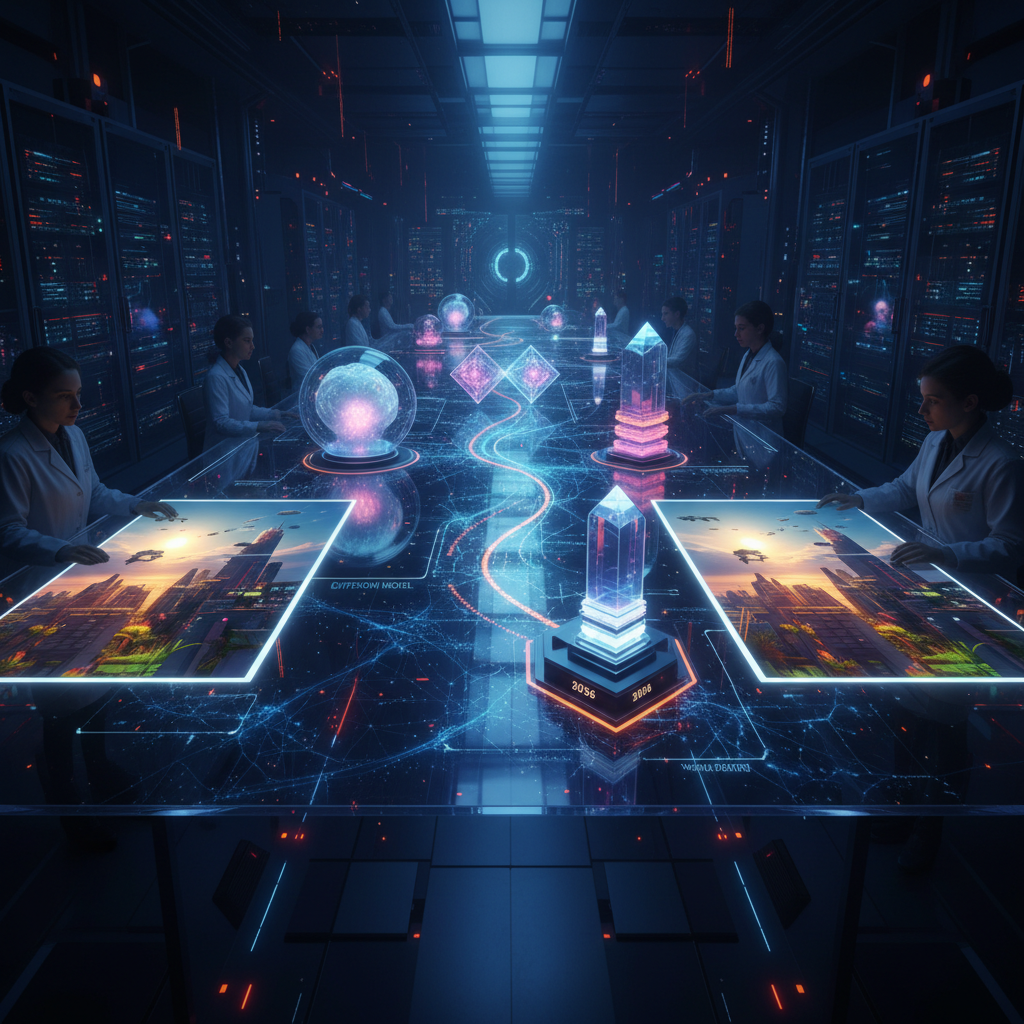
The year 2026 marks a pivotal moment in content creation, largely driven by the exponential advancements in artificial intelligence. Among the most revolutionary tools to emerge from this technological surge is the AI image to video generator. This sophisticated technology has transitioned from a niche, experimental concept to an indispensable asset for creators, marketers, and businesses worldwide. It empowers users to transform static images into dynamic, engaging video content with unprecedented ease and efficiency, fundamentally altering workflows and creative possibilities.
The capability of an AI image to video generator to breathe life into still visuals, adding motion, depth, and narrative, has opened up entirely new avenues for digital storytelling. No longer confined by the laborious and costly traditional video production processes, individuals and enterprises can now produce high-quality, professional-grade video content at scale. This shift is not merely an incremental improvement; it represents a paradigm change in how visual narratives are conceived and executed, making advanced video production accessible to a much broader audience.
Defining AI Image to Video Generation
At its core, an AI image to video generator is a sophisticated artificial intelligence system designed to convert one or more static images into a moving video sequence. This process involves complex algorithms that analyze the content of the input images, understand their context, and then intelligently infer and generate plausible motion, transitions, and even camera movements. Unlike simple animation tools that apply predefined effects, these AI generators leverage deep learning models to create highly realistic and contextually appropriate motion, often indistinguishable from traditionally shot footage.
The technology behind an AI image to video generator goes beyond mere interpolation; it synthesizes new frames that seamlessly bridge the gaps between still images, adding elements like subtle facial expressions, environmental dynamics, or object movement. Users typically provide a single image or a series of images, along with textual prompts or parameters guiding the desired motion, style, and duration. The AI then processes this input, applying its trained knowledge of physics, optics, and visual aesthetics to render a coherent and compelling video output.
The Transformative Impact on Content Creation by 2026
By 2026, the impact of the AI image to video generator on content creation is nothing short of revolutionary. This technology has democratized video production, enabling small businesses, independent creators, and even individuals to compete with larger, well-funded entities in terms of visual content quality and volume. The barriers to entry for video creation, traditionally high due to equipment, software, and expertise requirements, have been significantly lowered, fostering an explosion of diverse and innovative content across all platforms.
Content creators can now rapidly prototype video concepts, iterate on designs, and produce personalized content at a scale previously unimaginable. This agility is crucial in the fast-paced digital landscape of 2026, where staying relevant often means consistent, high-quality output. The AI image to video generator has become an essential tool for maintaining audience engagement, driving marketing campaigns, and bringing creative visions to life without extensive resources or specialized video editing skills, transforming the entire creative workflow.
Understanding the Core Technology: How an AI Image to Video Generator Works
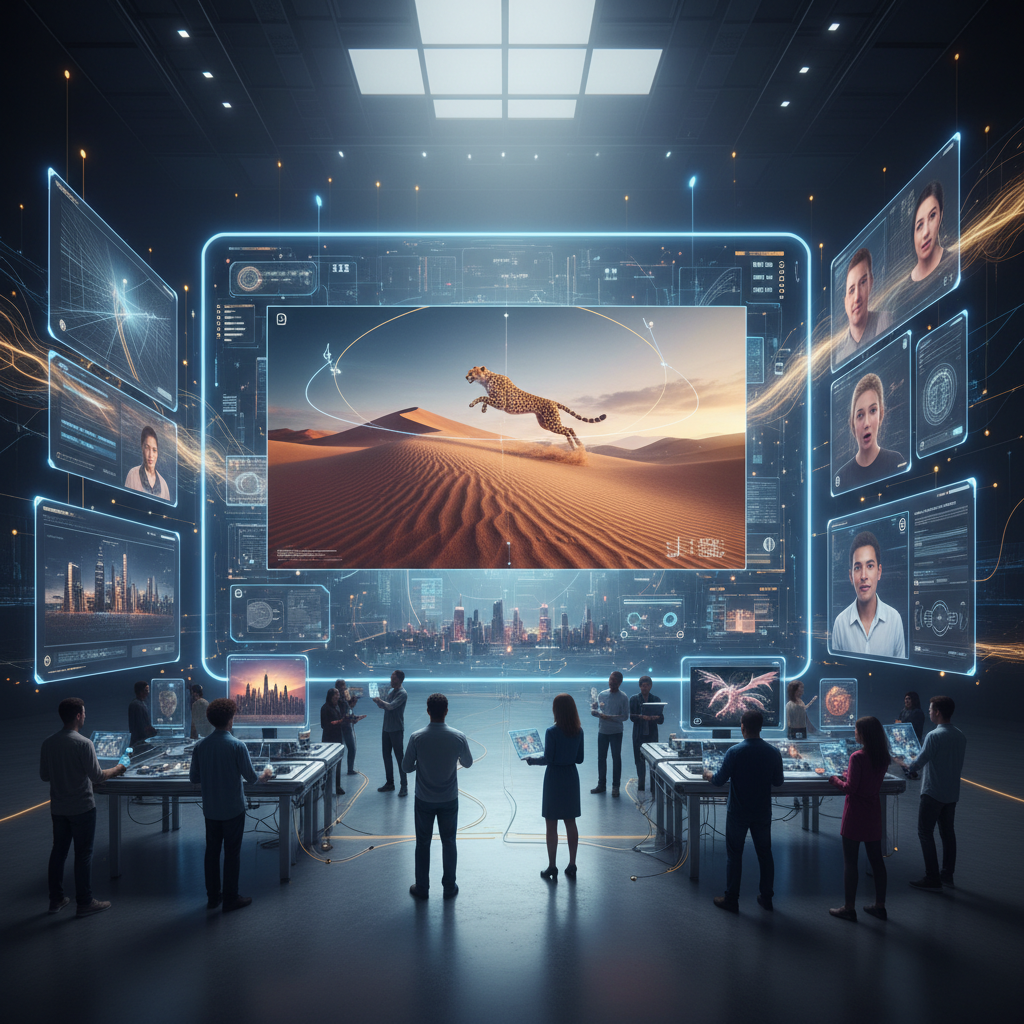
The magic behind an AI image to video generator lies in its intricate understanding and synthesis of visual data. It’s not simply overlaying animations; it’s about predicting and generating how pixels should evolve over time to create the illusion of natural movement. This process is computationally intensive and relies on vast datasets of real-world video to learn the nuances of motion, physics, and visual continuity.
In 2026, the leading platforms leverage highly advanced neural networks capable of discerning objects, textures, lighting conditions, and even implied narratives within a static image. When a user inputs an image and a prompt (e.g., “make the car drive away,” “animate the person speaking,” or “add a gentle breeze to the trees”), the AI interprets these instructions and translates them into a sequence of frames that collectively form a video. This sophisticated interpretation is what sets modern AI image to video generators apart from earlier, more rudimentary tools.
From Still Images to Dynamic Motion: The AI Process
The journey from a still image to dynamic motion within an AI image to video generator typically begins with a deep analysis of the input image. The AI identifies key elements such as subjects, backgrounds, lighting, and depth. Using its trained knowledge, it then predicts how these elements would naturally move or change over a given time duration. This prediction is guided by the user’s prompt, which specifies the desired action or camera movement, or by the AI’s own inference if no specific prompt is given.
Next, the AI generates intermediate frames that smoothly transition between the initial image and the predicted future states. This involves intricate pixel manipulation, often creating entirely new visual information that wasn’t present in the original still. For example, if a car is prompted to move, the AI might generate new background pixels that would become visible as the car shifts, or subtly alter the car’s perspective to simulate movement. The final step involves compiling these generated frames into a coherent video sequence, often applying post-processing to enhance realism and visual appeal, ensuring the output of the AI image to video generator is polished and professional.
Key AI Models Powering Video Synthesis (Diffusion, GANs, Transformers in 2026)
The state-of-the-art AI image to video generator platforms in 2026 primarily rely on a combination of advanced deep learning architectures. Diffusion models have become particularly prominent, excelling at generating high-quality, diverse, and coherent visual content. These models work by progressively adding noise to an image and then learning to reverse this process, effectively “denoising” random data into meaningful visuals. For video, they learn to denoise sequences of frames, ensuring temporal consistency. Their ability to generate incredibly detailed and realistic textures and lighting makes them ideal for video synthesis.
Generative Adversarial Networks (GANs), though still relevant, are often used in conjunction with diffusion models or for specific tasks like generating realistic facial expressions or unique stylistic transfers. GANs consist of a generator network that creates new data and a discriminator network that evaluates its authenticity, pushing the generator to produce increasingly realistic outputs. Transformers, originally designed for natural language processing, are now extensively applied in vision tasks, including video generation. Their ability to capture long-range dependencies across spatial and temporal dimensions makes them excellent for maintaining coherence and understanding complex relationships within a video sequence, further enhancing the capabilities of an AI image to video generator.
Ensuring Temporal Coherence and Visual Fidelity
One of the most significant challenges in video generation from still images is ensuring temporal coherence – that the motion across frames is smooth, logical, and consistent. Early AI models often struggled with “flickering” or objects appearing and disappearing erratically. In 2026, advanced AI image to video generator systems employ sophisticated techniques to overcome these issues. This includes incorporating explicit temporal attention mechanisms in transformer models, which allow the AI to consider not just the current frame but also preceding and succeeding frames when generating new content.
Furthermore, visual fidelity is paramount. This involves generating videos that not only move realistically but also maintain high resolution, accurate lighting, and consistent stylistic elements. Techniques like super-resolution are often integrated to upscale output to 4K or even 8K, while advanced rendering pipelines ensure photorealistic textures and shadows. The combination of these technologies means that the output from a modern AI image to video generator is often visually stunning and flows naturally, meeting the high expectations of professional content creators and audiences alike.
Advanced Features and Capabilities of Leading AI Image to Video Generators
The leading AI image to video generator platforms available in 2026 offer an impressive array of advanced features that go far beyond basic motion interpolation. These tools are designed to provide creators with granular control and expansive creative possibilities, blurring the lines between AI generation and traditional animation or live-action filmmaking. The sophistication of these features reflects years of intensive research and development in the field of generative AI, making them truly powerful assets for any creative professional.
From producing ultra-high-definition output to manipulating intricate details of motion, these generators are engineered for both efficiency and artistic expression. They represent a significant leap forward, transforming what was once a complex, multi-stage process into an intuitive, AI-driven workflow. Understanding these capabilities is key to leveraging the full potential of an AI image to video generator in your projects and staying ahead in the competitive content landscape.
High-Resolution Output and Photorealism (up to 8K)
A defining characteristic of the top-tier AI image to video generator platforms in 2026 is their ability to produce exceptionally high-resolution video output, with many offering capabilities up to 4K and even 8K resolution. This ensures that the generated videos are incredibly crisp, detailed, and suitable for large screens, cinematic presentations, or broadcast quality. The photorealism achieved is also astounding, thanks to advanced rendering techniques, sophisticated lighting models, and highly detailed texture generation, often making it challenging to distinguish AI-generated footage from real-world captures.
This level of visual fidelity is crucial for industries where image quality is paramount, such as advertising, film pre-visualization, and high-end digital art. The AI achieves this by synthesizing intricate details, realistic reflections, and subtle atmospheric effects that contribute to an immersive visual experience. The continuous improvement in resolution and photorealism means that an AI image to video generator is becoming an increasingly viable alternative for productions that demand the highest aesthetic standards.
Granular Control Over Motion, Camera Paths, and Object Animation
Modern AI image to video generator tools provide users with unprecedented granular control over every aspect of motion within the generated video. Creators can specify not just *that* an object should move, but *how* it should move—its speed, trajectory, acceleration, and even subtle nuances like bounce or sway. This level of control extends to camera movements, allowing users to define complex pan, tilt, zoom, and dolly shots, simulating professional cinematography without needing a physical camera or crew.
Object-specific animation is another powerful feature, enabling users to isolate elements within an image and animate them independently. For instance, a user might animate a character’s arm gesture, a tree’s leaves rustling in the wind, or a car driving through a static landscape. This precise control transforms the AI image to video generator from a simple motion tool into a sophisticated animation suite, offering immense flexibility for creative expression and storytelling.
Advanced Stylization, Character Animation, and Scene Expansion
Beyond photorealism, leading AI image to video generator platforms also offer extensive stylization options. Users can apply various artistic styles, from painterly and impressionistic to futuristic and abstract, transforming the aesthetic of the generated video to match their creative vision. This allows for unique visual branding and artistic experimentation. Furthermore, character animation capabilities have become incredibly sophisticated, enabling realistic facial expressions, body language, and even lip-syncing from a single image or a series of poses, making animated storytelling more accessible.
Scene expansion is another groundbreaking feature. If an input image shows only a small portion of a scene, the AI can intelligently “imagine” and generate the surrounding environment, extending the visual scope of the video. This is particularly useful for creating immersive backgrounds or for transforming a tightly cropped image into a sweeping cinematic shot. This expansive capability allows for truly dynamic and imaginative video narratives, significantly boosting the versatility of an AI image to video generator.
Seamless Integration with Other Generative AI Tools (Text-to-Image, Text-to-3D, Audio)
The power of a modern AI image to video generator is amplified significantly through its seamless integration with other generative AI tools. In 2026, it’s common for these platforms to form part of a larger AI-powered creative ecosystem. Users can leverage text-to-image generators to create initial still frames from simple prompts, which are then fed into the video generator. This creates an incredibly efficient workflow from concept to animated visual.
Furthermore, integration with text-to-3D tools allows for the generation of complex 3D assets that can be incorporated into the video, adding depth and interactivity. Audio generation AI, capable of creating realistic speech, sound effects, and musical scores from text prompts, can then be layered onto the AI-generated video, resulting in a complete multimedia production. This holistic approach to generative AI streamlines the entire content pipeline, making it faster and more cost-effective to produce rich, immersive experiences. For more on the broader generative AI landscape, see our article on generative AI trends in 2026.
Revolutionizing Industries: Practical Applications of AI Image to Video Generators
The widespread adoption and advanced capabilities of the AI image to video generator have initiated a profound transformation across numerous industries by 2026. This technology is not merely a novelty; it is a strategic asset that enhances efficiency, reduces costs, and unlocks new creative possibilities in sectors ranging from marketing to education. Its ability to quickly convert static visuals into dynamic narratives provides a competitive edge, allowing businesses and professionals to adapt to the ever-increasing demand for engaging video content.
The practical applications are diverse and continue to expand as the AI becomes more sophisticated and accessible. From creating compelling advertisements that capture attention to developing immersive educational materials, the AI image to video generator is proving to be an indispensable tool. Its impact is felt not just in creative departments but also in operational efficiencies and the strategic rollout of digital content across various platforms, making it a cornerstone of modern digital strategy.
Marketing, Advertising, and Dynamic Product Visualization
In the fiercely competitive realms of marketing and advertising, the AI image to video generator has become a game-changer. Marketers can now transform static product images or brand assets into engaging video ads, social media clips, and website banners with minimal effort and cost. This allows for rapid A/B testing of different video concepts and personalized content delivery at scale, significantly improving campaign performance and ROI.
Dynamic product visualization is a particularly powerful application. Businesses can take a single 3D render or photograph of a product and generate videos showcasing it from multiple angles, demonstrating features, or even placing it in various virtual environments. This eliminates the need for expensive photoshoots and complex animation studios, allowing brands to bring their products to life in compelling ways that capture consumer attention and drive sales. The speed and flexibility of an AI image to video generator are invaluable here.
Accelerating Content Creation for Social Media, YouTube, and Media Outlets
For social media managers, YouTubers, and traditional media outlets, the demand for fresh, high-quality video content is relentless. The AI image to video generator offers a vital solution to this challenge, drastically accelerating the content creation pipeline. Instead of spending hours or days on video editing, creators can now convert blog post hero images, infographic elements, or even static data visualizations into short, engaging video snippets in minutes.
This capability allows for a much higher volume of content production, crucial for maintaining audience engagement on platforms like TikTok, Instagram Reels, and YouTube Shorts. News organizations can quickly animate still photographs from events, adding motion and context to their reports, while educational channels can turn complex diagrams into easily digestible animated explanations. The efficiency gained by using an AI image to video generator ensures content creators can keep pace with the rapid consumption cycle of digital media.
Enhancing Gaming, Metaverse, and Virtual Experiences with Dynamic Assets
The burgeoning sectors of gaming, the metaverse, and virtual reality (VR) are also experiencing a significant uplift from the AI image to video generator. Developers can use this technology to rapidly create dynamic textures, animated background elements, and even short character animations from concept art or existing still assets. This speeds up the development cycle, reducing the time and resources required to build immersive virtual worlds and interactive experiences.
In the metaverse, where user-generated content and personalized experiences are key, an AI image to video generator enables individuals to easily animate their avatars, create dynamic virtual art installations, or bring their digital spaces to life with moving elements. For VR, it helps generate more realistic and fluid environments, enhancing immersion and user engagement. This integration of AI-powered video generation is crucial for scaling the creation of rich, interactive digital realities.
New Frontiers in Education, Architecture, and Journalism
Beyond the entertainment and marketing industries, the AI image to video generator is forging new frontiers in fields like education, architecture, and journalism. Educators can transform static diagrams, historical photographs, or scientific illustrations into animated lectures, making complex subjects more engaging and easier to understand for students. This enhances learning retention and accessibility, creating dynamic educational resources.
Architects and urban planners can use the technology to animate their 2D blueprints or renders, creating virtual walk-throughs or fly-overs of proposed designs, allowing clients and stakeholders to visualize projects more effectively. In journalism, still images from breaking news can be quickly animated to provide context and a more dynamic visual narrative, enhancing storytelling without compromising speed. The versatility of an AI image to video generator makes it a powerful tool for visual communication across these diverse professional domains.
Selecting the Ideal AI Image to Video Generator for Your Projects
With the rapid proliferation of AI tools in 2026, choosing the right AI image to video generator can be a daunting task. The market is saturated with options, each boasting unique features, pricing models, and performance metrics. Making an informed decision requires a clear understanding of your project needs, budget constraints, and desired output quality. It’s not just about finding the most feature-rich tool, but the one that best aligns with your specific workflow and creative objectives.
This section will guide you through the essential criteria for evaluation, highlight some of the top contenders in the current market, and provide insights into what constitutes truly high-quality AI-generated video. By carefully considering these factors, you can select an AI image to video generator that maximizes your productivity and enhances your creative output, ensuring a valuable return on your investment in this cutting-edge technology.
Key Criteria: Output Quality, Cost, Speed, and Ease of Use
When evaluating an AI image to video generator, several key criteria stand out. First and foremost is output quality. This encompasses resolution, photorealism, temporal coherence, and the naturalness of motion. Does the video look professionally produced, or does it suffer from artifacts, jitters, or unnatural movements? High-quality output is paramount for any professional application. Secondly, cost is a significant factor. Pricing models vary widely, from subscription-based services to pay-per-generation credits. Assess which model best fits your usage frequency and budget, considering the long-term investment.
Speed of generation is another critical consideration, especially for time-sensitive projects. Some generators can produce short clips in minutes, while others may take hours for more complex or longer videos. Finally, ease of use greatly impacts productivity. An intuitive interface, clear prompt engineering guidelines, and robust support documentation can significantly reduce the learning curve and streamline your workflow. The best AI image to video generator balances powerful features with an accessible user experience, making it efficient for creators of all skill levels.
Comparing Top Platforms and Their Unique Strengths in 2026
In 2026, the market for AI image to video generator platforms is dynamic and competitive, with several leaders setting industry standards. Platforms like RunwayML’s Gen-2 continue to lead with their robust feature sets, offering extensive control over motion and camera paths, making them a favorite for professional animators and filmmakers. Adobe’s Project Shasta, now integrated deeply into their Creative Cloud suite, provides seamless workflow for existing Adobe users, focusing on ease of use and integration with other creative tools.
Other notable contenders include Stability AI’s Stable Video Diffusion, known for its open-source flexibility and community-driven enhancements, appealing to developers and researchers, as well as creative professionals who want more control under the hood. For those prioritizing speed and simplicity, platforms like Pika Labs or HeyGen offer quick turnaround times for social media content and marketing videos, often with specialized templates and AI-driven voiceovers. Each AI image to video generator carves out its niche, so matching a platform’s strengths to your specific needs is crucial.
Evaluating Output Quality: What to Look for in an AI Image to Video Generator
Evaluating the output quality of an AI image to video generator requires a discerning eye. Look for consistency in motion: do objects move smoothly and predictably, or do they jump or distort? Assess the photorealism of textures, lighting, and shadows – do they appear natural and consistent across frames? Pay attention to temporal coherence, ensuring that elements maintain their identity and don’t flicker or disappear unexpectedly. The absence of noticeable artifacts or glitches is a strong indicator of a high-quality generator.
Beyond technical perfection, consider the creative flexibility. Does the AI accurately interpret complex prompts, and can it generate a diverse range of motions and styles? Examine how well it handles different subject matters, from human characters to landscapes or abstract shapes. A superior AI image to video generator will produce videos that not only look good but also effectively convey the intended narrative or emotion, demonstrating a deep understanding of visual storytelling principles. Always request or look for sample outputs that closely match your intended use case before committing to a platform.
Navigating the Ethical Landscape and Future Challenges for AI Image to Video Generators
As the capabilities of the AI image to video generator continue to expand, so too do the ethical considerations and challenges associated with its use. In 2026, the ability to generate highly realistic video content from static images has profound implications for truth, ownership, and societal norms. While the technology offers immense creative and commercial benefits, it also presents significant risks that require careful navigation by developers, users, and policymakers alike. Addressing these challenges proactively is essential for fostering responsible AI innovation and maintaining public trust.
The discussions around deepfakes, copyright, and environmental impact are no longer theoretical; they are pressing issues that demand immediate attention and thoughtful solutions. Understanding these ethical dimensions is not just a matter of compliance but a fundamental responsibility for anyone engaging with or developing an AI image to video generator. The future success and societal acceptance of this technology hinge on our collective ability to mitigate its potential harms while maximizing its positive contributions.
Addressing Deepfakes and the Spread of Misinformation
The most prominent ethical concern surrounding the AI image to video generator is its potential for creating deepfakes and facilitating the spread of misinformation. With the ability to generate hyper-realistic videos of individuals saying or doing things they never did, the technology poses a serious threat to trust in media, public figures, and even personal relationships. In 2026, sophisticated deepfake detection tools are becoming more widespread, but the arms race between generation and detection continues.
Platforms offering an AI image to video generator are under increasing pressure to implement robust safeguards, such as watermarking AI-generated content, developing provenance tracking systems, and integrating content authentication measures. Educational initiatives are also crucial to help the public discern between authentic and AI-generated media. The responsible use of an AI image to video generator hinges on a multi-faceted approach involving technological solutions, legal frameworks, and media literacy.
Copyright, Ownership, and Data Bias Concerns in AI-Generated Content
Questions of copyright and ownership are complex in the realm of AI-generated content. Who owns the copyright to a video generated by an AI from a user’s image and prompt? What if the AI was trained on copyrighted material without explicit permission? These legal ambiguities are being actively debated and shaped by new legislation in 2026. Furthermore, the issue of data bias is critical. If an AI image to video generator is trained on datasets that disproportionately represent certain demographics or perpetuate stereotypes, the generated videos can reflect and amplify these biases, leading to discriminatory or offensive content.
Developers are working towards more diverse and balanced training datasets and implementing fairness metrics to identify and mitigate biases. Users also have a responsibility to be aware of the potential for bias and to use AI tools ethically. Establishing clear guidelines for attribution, commercial use, and intellectual property for content created by an AI image to video generator is paramount for its long-term viability and ethical integration into creative industries. Forbes discusses the copyright conundrum for AI-generated content.
The Environmental Footprint of Advanced AI Video Generation
The environmental impact of advanced AI models, particularly those involved in complex video generation, is a growing concern. Training and running sophisticated diffusion and transformer models for an AI image to video generator require immense computational power, which consumes significant amounts of electricity. This energy consumption contributes to carbon emissions, raising questions about the sustainability of large-scale AI deployment. As AI models grow larger and more powerful, their carbon footprint also expands, making it a critical area for future innovation.
Researchers are exploring more energy-efficient AI architectures, optimizing algorithms for reduced computational load, and investing in renewable energy sources for data centers. Companies offering an AI image to video generator are increasingly transparent about their energy usage and are adopting greener practices. Balancing the benefits of AI-driven creativity with environmental responsibility is a challenge that the industry is actively addressing, recognizing the importance of sustainable technological advancement.
Promoting Responsible AI Development and Deployment
To navigate these challenges, promoting responsible AI development and deployment is essential. This involves a multi-stakeholder approach where AI developers, policymakers, ethicists, and users collaborate to establish best practices, ethical guidelines, and regulatory frameworks. Transparency in AI models, including understanding their training data and potential biases, is crucial. Implementing robust security measures to prevent misuse, such as generating malicious deepfakes, is also a priority.
Furthermore, fostering public dialogue and education about the capabilities and limitations of an AI image to video generator can help build trust and prevent widespread panic or misunderstanding. By prioritizing ethical considerations from the design phase through deployment, the industry can ensure that this powerful technology serves humanity’s best interests, unlocking its creative potential while mitigating its risks. This commitment to responsibility will define the trajectory of AI in the coming years.
The Future Horizon: What’s Next for AI Image to Video Technology?
The trajectory of the AI image to video generator is one of continuous and rapid evolution. As we look beyond 2026, the advancements on the horizon promise to push the boundaries of what’s possible, moving towards even more seamless, intelligent, and integrated video production capabilities. These future developments will not only enhance the realism and creative control but also fundamentally alter how we interact with and consume visual media. The pace of innovation in this field suggests that what seems futuristic today will be standard practice tomorrow.
The next generation of an AI image to video generator will likely feature capabilities that allow for the creation of entire cinematic narratives, personalized experiences at scale, and deeply immersive integrations with emerging technologies. These advancements will further democratize video creation, allowing virtually anyone to become a storyteller, and will unlock unprecedented efficiencies for professional studios. Understanding these upcoming trends is crucial for staying ahead in the rapidly evolving digital landscape.
Hyper-Realistic and Longer-Form Video Generation with Complex Narratives
One of the most anticipated advancements for the AI image to video generator is the ability to generate hyper-realistic, longer-form videos with complex narratives. Current models excel at short clips, but generating coherent, multi-minute, or even feature-length videos with consistent characters, plot progression, and emotional arcs remains a significant challenge. Future AI systems will overcome this by developing more sophisticated understanding of storytelling structures, character continuity, and world-building.
This will involve AI models that can maintain temporal coherence over extended periods, manage multiple evolving elements within a scene, and even respond to high-level narrative prompts like “create a suspenseful chase scene” or “show a heartwarming reunion.” The goal is to move beyond mere motion generation to genuine narrative synthesis, where an AI image to video generator can effectively act as a co-director or screenwriter, turning simple ideas into fully fleshed-out visual stories, allowing for unprecedented creative freedom and speed in filmmaking.
Real-Time Interactivity and Personalized Video Content at Scale
The future of the AI image to video generator will also heavily lean into real-time interactivity and the generation of personalized video content at an unprecedented scale. Imagine a world where marketing videos adapt dynamically to each viewer’s preferences, showing products in contexts most relevant to them, or where educational content customizes its examples based on a student’s learning progress. This level of personalization will be enabled by AI that can generate video on the fly, responding to user input, data analytics, or even biometric feedback.
Real-time generation will also open doors for live, interactive video experiences, such as virtual news anchors that can respond to audience questions in real-time, or personalized gaming cinematics that reflect player choices. This shift from pre-rendered, static video to dynamic, interactive, and personalized content will revolutionize how we engage with digital media, making every viewing experience unique and deeply engaging, driven by an advanced AI image to video generator.
Seamless Integration with 3D Environments, AR, and VR
The convergence of the AI image to video generator with 3D environments, Augmented Reality (AR), and Virtual Reality (VR) will define the next wave of immersive experiences. Future AI models will be able to seamlessly integrate generated video content into complex 3D scenes, allowing for dynamic textures, animated characters, and realistic environmental effects within virtual worlds. This will enable developers to populate metaverses and VR experiences with rich, living content that responds to user interaction and changes in the virtual environment.
For AR, an AI image to video generator will facilitate the creation of dynamic overlays that blend seamlessly with the real world, bringing static objects to life or adding animated informational layers to our surroundings. This integration will make AR and VR content creation more accessible and scalable, fostering a new era of immersive storytelling and interactive digital experiences. The ability to transform 2D images into 3D-aware video assets will be a key enabler for this future.
The Evolution Towards Autonomous Video Production Workflows
Ultimately, the long-term vision for the AI image to video generator is its evolution towards autonomous video production workflows. This means AI systems capable of handling the entire video creation process from concept to final edit, with minimal human intervention. Users could provide a high-level creative brief or a script, and the AI would then generate all necessary visual assets, animate them, compose camera shots, edit sequences, and even add sound design and music, all within a fully automated pipeline.
This doesn’t necessarily mean replacing human creativity but rather augmenting it, allowing creators to focus on conceptualization and artistic direction while the AI handles the laborious technical execution. Such autonomous systems would drastically reduce production times and costs, making high-quality video content accessible even for projects with extremely limited resources. The ultimate AI image to video generator would truly democratize sophisticated video production, enabling a new era of creative freedom and efficiency.
Conclusion: The Enduring Impact of the AI Image to Video Generator
Recap of Key Advancements and Transformative Benefits in 2026
The journey through 2026 reveals the AI image to video generator as a truly transformative technology, reshaping the landscape of content creation across virtually every industry. We’ve seen how its core technology, powered by sophisticated Diffusion models, GANs, and Transformers, converts static images into dynamic, temporally coherent, and visually stunning video sequences. This capability has moved far beyond simple animation, offering granular control over motion, camera paths, and stylization, with outputs reaching incredible 8K resolution and photorealism.
The benefits are tangible and widespread: marketers can create dynamic product visualizations, social media managers can rapidly produce engaging content, and developers can enhance gaming and metaverse experiences. Crucially, the AI image to video generator has democratized video production, lowering barriers to entry and enabling creators of all sizes to produce high-quality visual narratives efficiently and affordably. Its integration with other generative AI tools further streamlines workflows, creating a powerful, interconnected creative ecosystem.
The Road Ahead for Creative Professionals and Businesses
While the AI image to video generator offers immense opportunities, it also presents critical challenges related to deepfakes, copyright, data bias, and environmental impact. Navigating these ethical considerations responsibly is paramount for the sustainable growth and societal acceptance of this technology. The future promises even more incredible advancements, including hyper-realistic, longer-form video generation with complex narratives, real-time interactivity, seamless integration with 3D, AR, and VR, and ultimately, autonomous video production workflows.
For creative professionals and businesses, the message is clear: embracing the AI image to video generator is no longer an option but a strategic imperative. Those who leverage this technology effectively will unlock unparalleled creative potential, achieve greater efficiency, and stay competitive in an increasingly visual and fast-paced digital world. The enduring impact of the AI image to video generator will be defined by its capacity to empower human creativity and reshape the very fabric of digital storytelling for decades to come.