Introduction: Unveiling the Nintendo Switch 2

The gaming world is buzzing with unprecedented excitement as we stand firmly in 2026, awaiting the next big leap from Nintendo. For years, gamers and industry analysts alike have speculated about the successor to the incredibly successful Nintendo Switch. Now, with official confirmations and a torrent of credible leaks, the picture of the nintendo switch 2 is clearer than ever, promising a monumental upgrade that redefines portable gaming.
The anticipation builds: Why everyone’s talking about the next-gen console.
The original Nintendo Switch, launched back in 2017, revolutionized how we play, seamlessly blending home console and handheld experiences. Its innovative design and beloved first-party titles carved out a unique niche in the market. However, as technology advanced, the desire for a more powerful, visually stunning, and feature-rich successor grew undeniably strong. This collective yearning has fueled countless discussions across forums, social media, and major gaming publications.
In 2026, the discussion has shifted from “if” to “when” and “what exactly.” The prospect of playing beloved Nintendo franchises with cutting-edge graphics, faster load times, and enhanced performance on the go is a dream on the cusp of becoming reality. The industry is watching closely, anticipating how Nintendo will once again push boundaries and capture the imagination of millions with the Nintendo Switch 2.
Setting the stage for a revolution in portable gaming.
Nintendo has a storied history of innovation, from the Game & Watch to the Wii, consistently disrupting the status quo. The Nintendo Switch 2 is poised to continue this legacy, not just as a hardware upgrade, but as a platform designed to evolve the entire portable gaming paradigm. We’re looking at a console that aims to deliver experiences previously confined to high-end home systems, all within a familiar, yet significantly enhanced, hybrid form factor.
This isn’t merely about higher resolution or faster frame rates; it’s about a holistic improvement that impacts every facet of gameplay. From immersive new titles to revitalized classics, the next-gen console promises to set a new benchmark for what players can expect from a handheld device. The stage is set for a true revolution, and the nintendo switch 2 is at its very heart.
What We Know So Far About the Nintendo Switch 2
Official announcements and credible leaks in 2026.
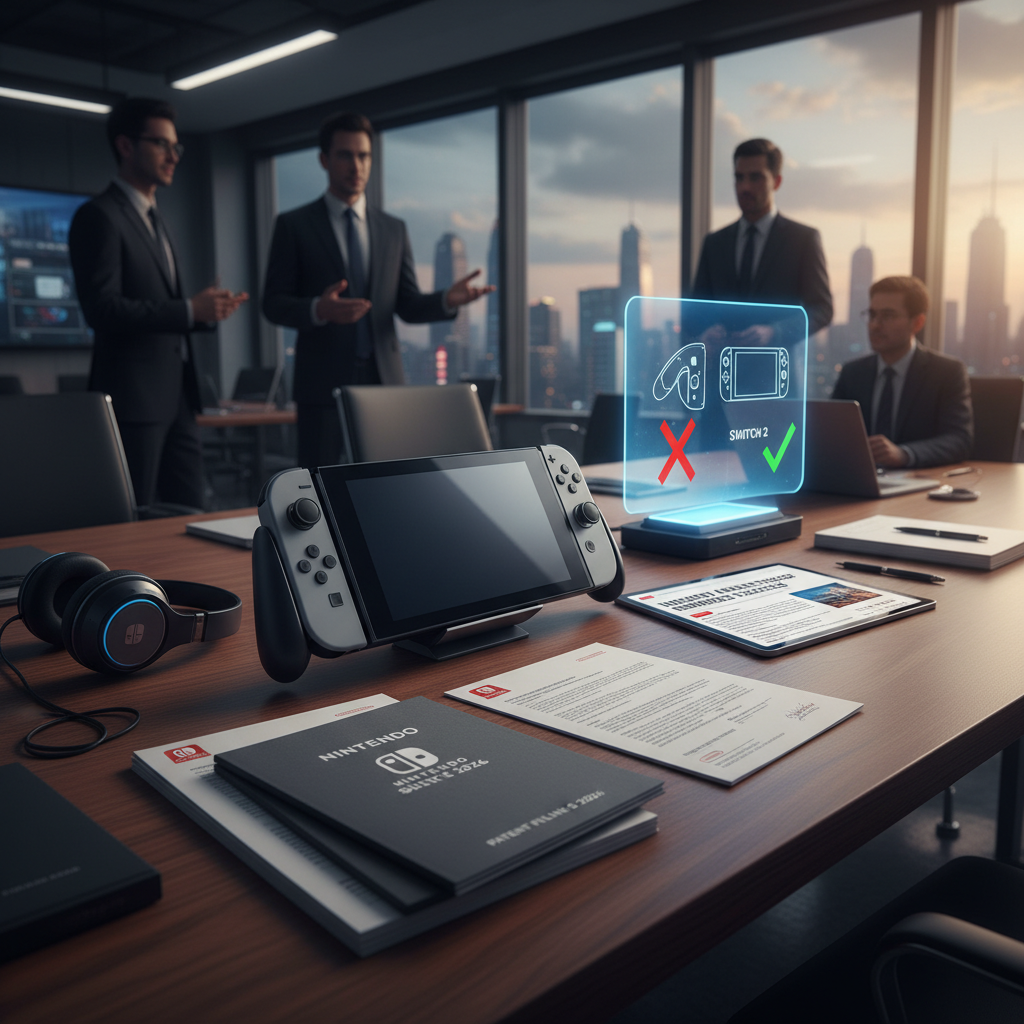
While Nintendo has maintained its characteristic secrecy for much of the development cycle, 2026 has brought a wave of clarity. Following a series of strategic teasers and carefully orchestrated reveals, key specifications and design elements of the Nintendo Switch 2 have been officially confirmed. These announcements, often delivered during investor calls and exclusive press briefings, have validated many of the long-standing rumors, much to the relief of eager fans.
Beyond the official channels, a robust network of industry insiders and data miners has provided a steady stream of credible leaks. These often detail specific hardware components, internal development kits, and even glimpses of early game builds. While always taken with a grain of salt, the consistency and overlap between various sources have painted a largely coherent picture of what the nintendo switch 2 will offer upon release.
Patent filings hinting at innovative design.
A treasure trove of information has come from Nintendo’s numerous patent filings over the past few years, many of which have been granted in late 2025 and early 2026. These patents reveal a deep dive into potential new functionalities and design philosophies. For instance, several filings hint at improvements to the Joy-Con attachment mechanism, aiming for increased durability and reduced drift issues, which were common complaints with the original hardware.
Other patents explore advanced haptic feedback systems, dynamic cooling solutions for sustained performance, and even novel display technologies. While not every patent translates directly into a consumer product, they collectively illustrate Nintendo’s commitment to innovation and give us a strong indication of the core design principles guiding the development of the nintendo switch 2.
Industry analyst predictions and insights.
Leading industry analysts have been vocal throughout 2026, offering sophisticated predictions based on supply chain intelligence, developer interviews, and market trends. Firms like Circana and Ampere Analysis have consistently pointed to a powerful NVIDIA Tegra-based SoC, specifically designed for mobile gaming, as the engine driving the new console. Their forecasts often include projected sales figures, market penetration, and the strategic importance of the device in Nintendo’s broader ecosystem.
These experts also frequently discuss the console’s positioning against competitors, emphasizing its unique hybrid appeal and Nintendo’s unparalleled first-party software library. Their insights are crucial for understanding the strategic implications of the nintendo switch 2’s launch, not just for gamers but for the entire entertainment industry.
Addressing the ‘Switch Pro’ vs. ‘Switch 2’ debate.
For years, the gaming community debated whether Nintendo would release a “Switch Pro” – an enhanced version of the original – or a true “Switch 2” – a next-generation console. In 2026, this debate has been definitively settled. The official announcements and overwhelming evidence confirm that the upcoming device is indeed a full generational leap, warranting the “Switch 2” moniker.
Unlike the incremental upgrades seen with the Switch OLED model, the nintendo switch 2 features a complete overhaul of its internal architecture, a significant boost in processing power, and substantial improvements across all hardware components. This makes it a distinct successor rather than just a mid-cycle refresh, justifying the anticipation for a truly next-gen experience.
Expected Features and Enhancements of the Nintendo Switch 2
Display Technology: OLED improvements, resolution, and refresh rates.
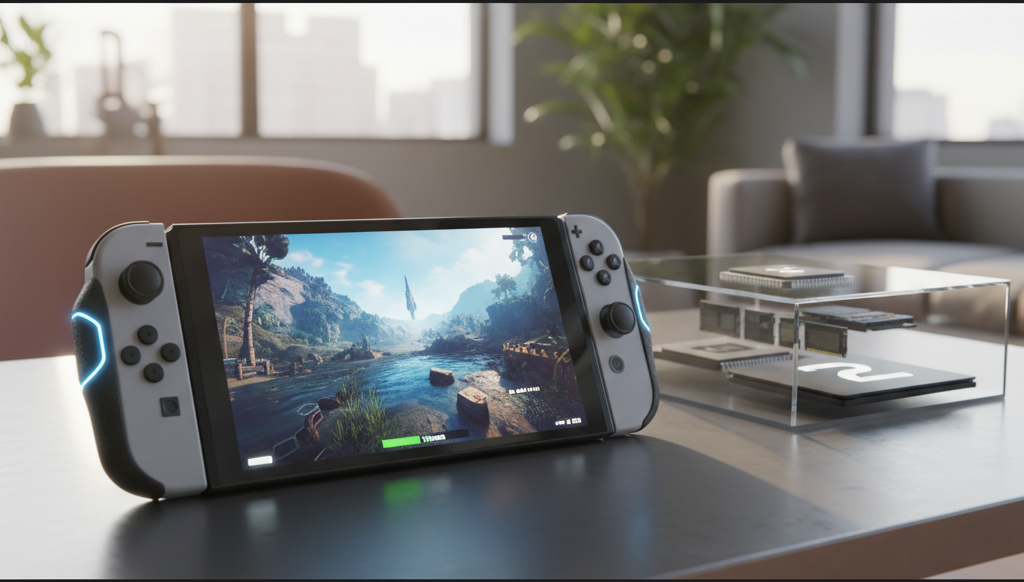
The display is arguably one of the most critical components for a portable console, and the Nintendo Switch 2 is set to deliver significant upgrades. Building on the success of the Switch OLED, the new console is expected to feature an even more advanced OLED panel, offering superior brightness, contrast, and color accuracy. This next-generation display will likely boast a higher resolution, potentially reaching 1080p in handheld mode and dynamic 4K output when docked, utilizing advanced upscaling technologies.
Furthermore, whispers suggest a variable refresh rate (VRR) display, possibly up to 120Hz, which would provide incredibly smooth gameplay for titles that can push those frame rates. This enhancement would not only make games look more fluid but also contribute to a more responsive and immersive user experience across the board.
Under the Hood: Processor, RAM, and storage upgrades.
At the heart of the Nintendo Switch 2 lies a custom NVIDIA Tegra processor, rumored to be a derivative of the Orin family, optimized for low power consumption and high performance. This chip will bring a substantial leap in CPU and GPU capabilities, allowing for more complex game worlds, sophisticated AI, and detailed graphics. Early benchmarks from development kits hint at performance levels comparable to entry-level current-gen consoles.
Accompanying the powerful new SoC will be a significant increase in RAM, moving from the original Switch’s 4GB to an expected 8GB or even 12GB of LPDDR5X memory. This expanded memory will facilitate larger game assets, smoother multitasking, and more efficient background processes. Storage is also getting a crucial upgrade, with a minimum of 64GB or 128GB of faster internal NVMe storage, expandable via a high-speed microSD slot, addressing one of the core limitations of its predecessor.
Joy-Cons Evolved: New haptic feedback, improved durability, and potential new functionalities.
The iconic Joy-Cons are receiving a much-needed overhaul for the Nintendo Switch 2. While retaining their detachable nature, they are expected to feature enhanced durability, particularly addressing the notorious “Joy-Con drift” issue through revised internal mechanisms and materials. The haptic feedback system is also getting a major upgrade, moving beyond the original HD Rumble to a more nuanced and powerful haptic engine, offering a wider range of tactile sensations for deeper immersion.
New functionalities are also anticipated, such as improved gyroscopic sensors, possibly new programmable buttons on the underside, or even subtle changes to the rail system for a more secure attachment. Some patents have even hinted at self-adjusting triggers or integrated cameras, though these remain speculative. The goal is to make the Joy-Cons even more versatile and robust for the next generation of gaming.
Battery Life: A critical improvement for portable play.
For any portable console, battery life is paramount. Nintendo understands this, and the Nintendo Switch 2 is designed with significant improvements in mind. Despite the more powerful hardware and enhanced display, advancements in power efficiency of the new NVIDIA SoC, coupled with a larger capacity battery, are expected to deliver extended playtimes. This means longer gaming sessions on the go, reducing the anxiety of constantly searching for a charger.
Optimized power management software and more efficient components will work in tandem to maximize battery endurance, ensuring that gamers can enjoy their favorite titles for hours without interruption. This focus on practical, real-world usage underscores Nintendo’s commitment to the portable experience.
Connectivity: Wi-Fi 7, Bluetooth 5.4, and enhanced online capabilities.
In 2026, robust and fast connectivity is non-negotiable. The Nintendo Switch 2 is anticipated to feature the latest wireless standards, including Wi-Fi 7 (802.11be), offering significantly faster speeds, lower latency, and improved reliability for online gaming, digital downloads, and cloud services. This upgrade will make downloading large titles and patches a breeze, and ensure stable, lag-free multiplayer experiences.
Bluetooth 5.4 is also expected, providing more stable connections for wireless accessories like headphones and controllers, with improved range and power efficiency. Furthermore, enhanced online capabilities, potentially including a revamped Nintendo Switch Online service, will leverage these connectivity improvements to deliver a more seamless and feature-rich online gaming ecosystem. The nintendo switch 2 will truly be a connected device.
Gaming Experience on the Nintendo Switch 2: A New Era
Next-level graphics and performance capabilities.
The most immediately noticeable improvement on the Nintendo Switch 2 will be the dramatic leap in graphics and overall performance. Developers will no longer be as constrained by the original Switch’s hardware limitations, allowing them to create visually stunning worlds with higher polygon counts, more detailed textures, and dynamic lighting effects. Frame rates will be more stable, with many titles targeting a consistent 60 frames per second, even in handheld mode.
This increased horsepower means games can run at higher resolutions without sacrificing performance, delivering a truly next-level visual fidelity that rivals dedicated home consoles. The raw processing power of the new SoC unlocks a new era for Nintendo’s first-party titles and opens the door for more ambitious third-party ports that were previously impossible.
Exclusive titles optimized for the new hardware.
While backward compatibility is a key feature, the true potential of the Nintendo Switch 2 will be showcased through its exclusive, next-generation titles. Nintendo’s internal studios are renowned for pushing their hardware to its limits, and with the increased power of the Switch 2, we can expect breathtaking new entries in beloved franchises like Zelda, Mario, and Pokémon, specifically designed to leverage the console’s advanced capabilities.
These games will feature expansive open worlds, intricate character models, and complex physics engines that simply couldn’t run on the original Switch. Third-party developers are also eager to jump on board, promising exclusive titles and optimized ports that make the most of the new hardware, ensuring a rich and diverse gaming library from day one.
How ray tracing and AI upscaling will transform gameplay.
Two of the most exciting technological advancements expected in the Nintendo Switch 2 are hardware-accelerated ray tracing and AI upscaling, likely powered by NVIDIA’s DLSS equivalent. Ray tracing will enable incredibly realistic lighting, shadows, and reflections, adding a new layer of visual immersion to game worlds. Imagine the reflective surfaces in a futuristic city or the subtle play of light through a dense forest, all rendered in real-time on a handheld device.
AI upscaling technology, on the other hand, will allow games to render at a lower internal resolution and then intelligently upscale to the display’s native resolution, often 1080p or even 4K when docked, with minimal loss in visual quality. This technique dramatically improves performance, enabling higher frame rates and more detailed graphics without taxing the hardware as much, effectively bridging the gap between portable and home console visuals.
The impact of faster load times on immersion.
One of the less glamorous but equally impactful improvements comes from the implementation of faster NVMe storage. The original Switch’s load times could often pull players out of the immersive experience. With the Nintendo Switch 2, those long waits will be significantly reduced, leading to a much smoother and more continuous gameplay flow.
Faster load times mean less time staring at loading screens and more time exploring vast open worlds, jumping between levels, or respawning instantly. This seemingly small improvement has a profound effect on player satisfaction and overall immersion, ensuring that the gaming experience remains fluid and engaging from start to finish.
Backward Compatibility and Your Existing Library
Playing your original Switch games on the Nintendo Switch 2.
Nintendo has a strong track record of supporting its existing player base, and the Nintendo Switch 2 is no exception. A crucial feature confirmed for the new console is full backward compatibility with the entire library of original Nintendo Switch games, both physical Game Cards and digital purchases. This means your extensive collection of titles, from indie gems to blockbuster exclusives, will seamlessly transfer to your new hardware.
This commitment ensures that early adopters and long-time fans can upgrade without fear of losing access to their beloved games. It also means that the nintendo switch 2 will launch with an already massive and diverse game library, offering immediate value to new buyers.
Performance boosts for older titles.
Backward compatibility on the Nintendo Switch 2 isn’t just about playing old games; it’s about playing them better. Thanks to the significantly more powerful processor and increased RAM, many original Switch titles are expected to receive automatic performance boosts. This could manifest as more stable frame rates, reduced loading times, and potentially even dynamic resolution scaling improvements.
While not every game will see a dramatic overhaul without developer patches, the raw power of the Switch 2 will ensure a smoother, more consistent experience across the board for your existing library. Imagine playing Breath of the Wild or Super Mario Odyssey with fewer frame drops, especially in busy areas – a welcome improvement for many.
Transferring saves and digital purchases.
A seamless transition is vital, and Nintendo has made it a priority to ensure that transferring your progress and digital content to the Nintendo Switch 2 is straightforward. Your Nintendo Account will serve as the hub for all your digital purchases, allowing you to redownload games and DLC onto the new console without any hassle. Cloud saves, a feature of the Nintendo Switch Online service, will also facilitate the transfer of your game progress.
Players will be able to easily migrate their save data, user profiles, and digital licenses from their original Switch to the new device, ensuring that their gaming journey continues uninterrupted. This user-friendly approach minimizes friction for upgrades and reinforces player loyalty.
The importance of a seamless transition for loyal fans.
For Nintendo, ensuring a smooth transition for its millions of loyal fans is not just a convenience; it’s a strategic imperative. By offering full backward compatibility and easy data migration, the company fosters goodwill and encourages upgrades without alienating its existing customer base. This approach maximizes the value of their extensive software library and makes the decision to purchase the nintendo switch 2 an easy one for many.
A seamless transition means that players feel their investment in the Nintendo ecosystem is respected, strengthening their connection to the brand. It allows the Switch 2 to hit the ground running with an enormous install base of potential buyers, all eager to experience their favorite games and new adventures on superior hardware.
Price, Release Date, and Availability of the Nintendo Switch 2
Anticipated launch window and global rollout.
As of 2026, the anticipated launch window for the Nintendo Switch 2 has narrowed considerably. Industry analysts and insider reports point to a global rollout beginning in late Q3 or early Q4 of this year, positioning it perfectly for the crucial holiday shopping season. Nintendo typically favors a coordinated worldwide launch to capitalize on marketing momentum, so we can expect simultaneous or near-simultaneous releases across major regions like North America, Europe, and Japan.
The exact date will likely be revealed during a dedicated Nintendo Direct presentation in the coming months, building hype and allowing retailers to prepare for pre-orders. This strategic timing aims to maximize initial sales and establish the console as a dominant force in the market right out of the gate.
Projected pricing strategies and bundles.
Pricing is always a critical factor, and Nintendo is expected to position the Nintendo Switch 2 competitively. Current projections from market intelligence firms suggest a launch price in the range of $399 to $449 USD for the base model. This price point reflects the significant hardware upgrades while remaining accessible to a broad audience, maintaining Nintendo’s strategy of offering value.
Nintendo is also renowned for its attractive launch bundles, and we can anticipate various options. These will likely include the console paired with a highly anticipated first-party launch title, or perhaps special editions with unique Joy-Con colors or themed docks. These bundles will offer added incentive for early adoption and provide choice for consumers.
Where to pre-order and secure your console.
Given the immense anticipation, securing a Nintendo Switch 2 at launch will likely require swift action. Major retailers such as Amazon, Best Buy, GameStop, Target, and Walmart are all expected to open pre-orders shortly after the official announcement of the release date. Online storefronts will be the primary avenue, though some brick-and-mortar locations might offer limited in-store pre-orders.
Prospective buyers are advised to sign up for email notifications from their preferred retailers and follow reputable gaming news outlets for real-time updates on pre-order availability. Demand is expected to be extremely high, making early pre-ordering crucial to avoid disappointment.
Market availability and potential supply challenges in 2026.
While Nintendo has reportedly been stockpiling components and ramping up production throughout 2025 and 2026, potential supply challenges remain a consideration. Global logistics and semiconductor availability, though improved since earlier years, can still present hurdles for mass-market consumer electronics. Initial stock might be limited, leading to temporary shortages in the weeks following launch.
However, Nintendo is keenly aware of past supply issues and has likely implemented robust strategies to mitigate them. We expect a steady replenishment of stock throughout the holiday season and into early 2027, ensuring that most eager buyers will be able to get their hands on a Nintendo Switch 2 within a reasonable timeframe. For more insights on global supply chains, you might refer to analyses on sites like Harvard Business Review.
Comparing the Nintendo Switch 2 to Competitors
Vs. Steam Deck and other PC handhelds: A battle for performance and ecosystem.
The portable gaming landscape has evolved significantly since the original Switch’s launch, with powerful PC handhelds like the Steam Deck, ASUS ROG Ally, and Lenovo Legion Go now vying for market share. The Nintendo Switch 2 will undoubtedly face direct comparison with these devices, particularly concerning raw performance and graphical fidelity. While PC handhelds boast open ecosystems and access to vast PC game libraries, the Switch 2 offers a more curated, optimized experience.
Nintendo’s advantage lies in its unparalleled first-party exclusives and a hardware-software integration that ensures optimal performance for its titles. While the Steam Deck might offer higher theoretical specs, the Switch 2’s focus on efficiency and bespoke hardware will likely translate to a more consistent and polished experience for its dedicated library. It’s a battle between open versatility and optimized exclusivity.
Vs. PlayStation 5 Pro and Xbox Series X/S: Bridging the console gap.
When comparing the Nintendo Switch 2 to traditional home consoles like the PlayStation 5 Pro and Xbox Series X/S, it’s essential to recognize their fundamentally different philosophies. The PS5 Pro and Xbox Series X are powerhouses designed for fixed home entertainment, pushing the boundaries of 4K gaming and high-fidelity graphics on large screens. The Switch 2, while significantly more powerful than its predecessor, still prioritizes portability and hybrid functionality.
However, the new Switch aims to bridge the gap considerably. With AI upscaling and enhanced graphics, docked Switch 2 games will look far closer to current-gen home console experiences than ever before. It offers a compelling alternative for those who desire both high-quality gaming and the flexibility to play anywhere, without needing two separate devices. The nintendo switch 2 might not match raw teraflops, but its unique value proposition remains strong.
Unique selling points that set the Switch 2 apart.
The Nintendo Switch 2 maintains and enhances the core unique selling points that made its predecessor a phenomenon. Foremost among these is its unparalleled hybrid nature, seamlessly transitioning between a handheld device and a docked home console. No other major competitor offers this level of versatility with such a refined user experience.
Furthermore, Nintendo’s unrivaled library of first-party exclusives, including beloved franchises like Mario, Zelda, and Pokémon, remains a powerful draw. These games are system sellers, offering experiences found nowhere else. The innovative Joy-Con controllers, now with improved haptics and durability, also provide unique gameplay possibilities not replicated by other platforms. This combination of hybrid design, exclusive content, and innovative controls firmly establishes the nintendo switch 2 in its own distinct category.
The Future of Portable Gaming with the Nintendo Switch 2
Nintendo’s strategic vision for the next decade.
The launch of the Nintendo Switch 2 is not merely a product release; it’s a statement of Nintendo’s strategic vision for the next decade of gaming. The company is doubling down on its hybrid console philosophy, recognizing the enduring appeal of flexible gameplay. Their strategy involves continuous innovation in hardware, coupled with a relentless focus on creating unique and engaging software experiences that leverage the console’s distinct features.
Nintendo aims to expand its audience further, appealing to both casual players and hardcore enthusiasts with a diverse range of titles and accessible gameplay. The Switch 2 is positioned as the central pillar of this vision, designed to evolve and adapt to future technological trends and consumer demands. This long-term perspective ensures the console’s relevance and longevity in a rapidly changing industry.
Potential for VR/AR integration.
While not a launch feature, the increased processing power of the Nintendo Switch 2 opens intriguing possibilities for future VR/AR integration. Nintendo has dabbled in these spaces before, notably with Labo VR, and patents have shown continued research into head-mounted displays and augmented reality accessories. The Switch 2’s enhanced display and graphical capabilities could support more sophisticated VR experiences, perhaps through a dedicated accessory or a future iteration.
Imagine playing a scaled-down, yet compelling, VR experience powered by your Switch 2, or utilizing AR features that blend digital content with your real-world environment. While still speculative, the underlying hardware foundations are being laid for Nintendo to explore these immersive technologies more seriously in the coming years, potentially offering a unique take on virtual and augmented reality gaming.
Cloud gaming possibilities and hybrid models.
The Nintendo Switch 2 is also well-positioned to embrace the growing trend of cloud gaming. With Wi-Fi 7 and enhanced online capabilities, the console could seamlessly integrate with Nintendo’s own cloud gaming services or even third-party platforms, offering access to a broader library of games that might be too demanding for local processing. This could lead to a truly hybrid model, where some games run natively on the device, while others are streamed.
This approach would significantly expand the console’s capabilities, allowing players to access high-fidelity titles without requiring massive local downloads or pushing the hardware to its absolute limits. It represents a flexible future where the line between local and streamed gaming blurs, providing more options and accessibility for gamers worldwide.
The evolving role of the Switch ecosystem.
The Nintendo Switch 2 is more than just a console; it’s the evolution of an entire ecosystem. This includes the Nintendo Switch Online service, which is expected to receive significant enhancements, potentially offering a tiered subscription model with more classic games, exclusive content, and improved online infrastructure. The eShop will also continue to grow, becoming an even more robust digital storefront for both first-party and indie titles.
Furthermore, the ecosystem extends to accessories, amiibo integration, and connectivity with other Nintendo platforms and mobile devices. The Switch 2 will serve as the central hub, consolidating and expanding Nintendo’s digital presence and ensuring a cohesive, interconnected experience for its users. This holistic approach is key to its long-term success, fostering a vibrant community and enduring engagement.
Conclusion: Is the Nintendo Switch 2 Worth the Upgrade?
Recap of key features and benefits.
The Nintendo Switch 2 represents a significant generational leap, addressing nearly all the limitations of its predecessor while enhancing its core strengths. We’re looking at a console with a stunning OLED display, likely supporting higher resolutions and refresh rates, powered by a custom NVIDIA Tegra SoC that delivers next-level graphics with ray tracing and AI upscaling capabilities. Improved Joy-Cons promise greater durability and advanced haptics, while increased RAM and NVMe storage ensure faster load times and smoother performance.
Crucially, the Switch 2 offers full backward compatibility, allowing you to bring your entire existing game library with you, often with performance enhancements. Enhanced battery life and cutting-edge connectivity with Wi-Fi 7 and Bluetooth 5.4 round out a compelling package, promising a truly revolutionary portable gaming experience. For further reading on the evolution of portable gaming, consider checking out our article on handheld consoles.
Who should upgrade and who might wait.
For existing Nintendo Switch owners, the decision to upgrade to the Nintendo Switch 2 is largely a matter of how much you value cutting-edge performance and visual fidelity. If you are eager for next-gen graphics, faster load times, and access to exclusive new titles that fully leverage the new hardware, then the Switch 2 is undoubtedly a worthwhile investment. Hardcore gamers and those who play frequently will find the improvements transformative.
If you primarily play older, less graphically intensive games, or if your gaming budget is tight, waiting might be a sensible option. Your existing Switch will continue to play your library, and many new games will likely still offer some form of cross-generation support for a period. However, the sheer leap in technology and the promise of truly next-gen Nintendo experiences make a strong case for upgrading sooner rather than later.
Final thoughts on Nintendo’s latest innovation.
The Nintendo Switch 2 is more than just a console; it’s Nintendo’s bold vision for the future of gaming. It embodies the company’s philosophy of innovative gameplay, accessible design, and unparalleled first-party experiences, all wrapped in a powerful, versatile package. By blending the best of home console and portable gaming, the Switch 2 is poised to once again redefine expectations and capture the hearts of millions.
As we move through 2026, the excitement for this device is palpable. The Nintendo Switch 2 is not just an upgrade; it’s an evolution, setting a new standard for what a hybrid console can achieve and solidifying Nintendo’s position as a leader in the ever-evolving world of interactive entertainment. It promises an exciting new chapter for gamers everywhere.