Understanding What Is a Smart TV Box in 2026
The Modern Home Entertainment Hub Defined
In 2026, the landscape of home entertainment is more integrated and intelligent than ever before. At the heart of this evolution often lies a versatile device known as a smart TV box. Far from a simple media player, understanding what is a smart TV box today means recognizing it as a powerful, compact computer designed to transform any television into a comprehensive entertainment and smart home control center. These devices bridge the gap between traditional broadcasting and the vast, ever-expanding world of digital content, apps, and connected services.
They represent a critical component for consumers seeking personalized, on-demand experiences, offering access to streaming giants, specialized applications, and advanced functionalities that even many integrated smart TVs might not provide. With rapid advancements in processing power, connectivity, and artificial intelligence, smart TV boxes continue to redefine how we interact with our screens, moving beyond passive viewing to interactive engagement.
Why Smart TV Boxes Remain Relevant in a Smart TV Era
Despite the ubiquity of smart TVs, which come with built-in operating systems and app stores, smart TV boxes maintain significant relevance. This might seem counterintuitive, but the reasons are multifaceted and compelling in 2026. Firstly, many existing smart TVs, even those purchased a few years ago, may lack the latest hardware for high-fidelity streaming, such as support for 8K resolution, advanced HDR formats like Dolby Vision IQ, or Wi-Fi 7 connectivity. A dedicated smart TV box offers a cost-effective upgrade path, extending the lifespan and capabilities of an otherwise perfectly good television.
Secondly, smart TV box manufacturers often provide more frequent software updates and access to a broader, more current app ecosystem than integrated smart TV platforms, whose support can wane after a few years. This ensures users have access to the newest streaming services, cloud gaming platforms, and smart home integrations without needing to replace their entire television. The dedicated processing power and optimized operating systems of these boxes often result in a smoother, faster, and more responsive user experience compared to the sometimes sluggish performance of an entry-level smart TV’s built-in software. This enhanced performance is a key aspect of understanding what is a smart TV box in the current market.
A Brief History: From Media Players to AI-Powered Devices
The journey of the smart TV box began humbly, evolving from basic media players that could play local files from USB drives or network shares. Early iterations primarily focused on digital media consumption, allowing users to watch downloaded movies or listen to music on their TV screens. As internet speeds improved and streaming services emerged in the late 2000s and early 2010s, these devices began integrating connectivity features, enabling access to platforms like Netflix and YouTube.
By the mid-2010s, the introduction of dedicated operating systems like Android TV and tvOS transformed them into app-centric devices, mirroring the smartphone revolution. Fast forward to 2026, and the modern smart TV box is a sophisticated, AI-powered device. They feature neural processing units (NPUs) for advanced AI upscaling, predictive content recommendations, and seamless voice control, often acting as central hubs for smart home ecosystems through standards like Matter and Thread. This trajectory showcases a profound transformation, highlighting how the concept of what is a smart TV box has expanded dramatically over time.
The Evolution and Essential Role of a Smart TV Box in Modern Entertainment
Defining What Is a Smart TV Box in Today’s Connected World
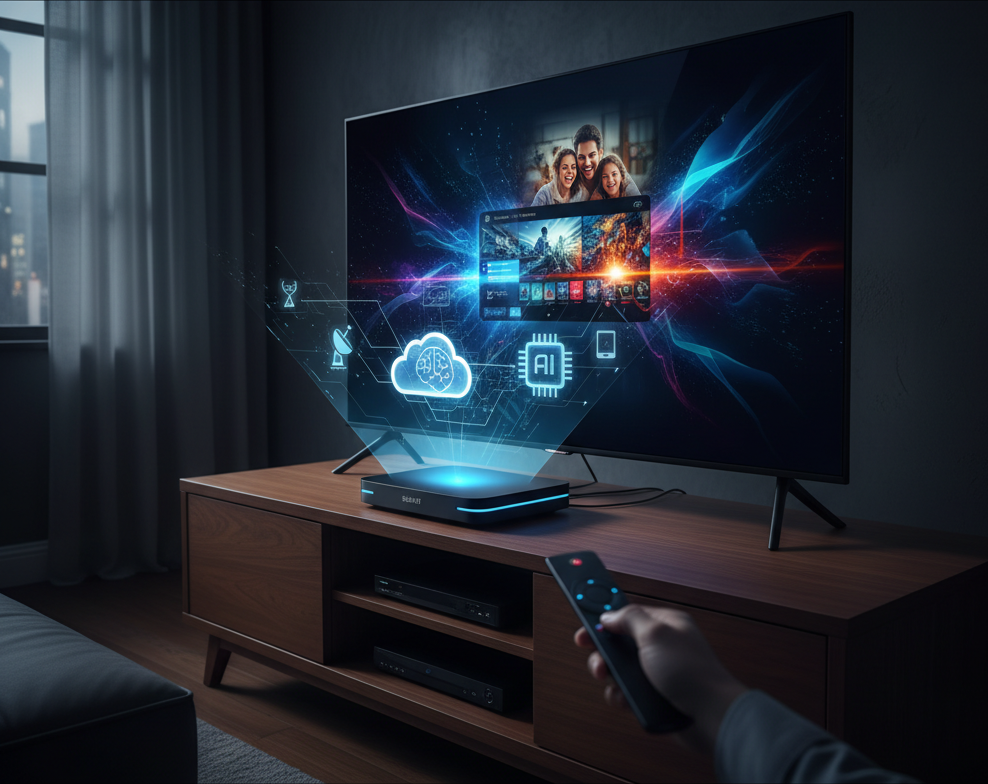
In 2026, defining what is a smart TV box goes far beyond its initial purpose. It is a compact, network-connected device that plugs into a television, typically via an HDMI port, to deliver a vast array of digital content and interactive services. Functionally, it acts as an external operating system for your TV, providing a user interface, an app store, and hardware to process high-definition video and audio. These devices are characterized by their powerful processors, ample RAM, and advanced connectivity options, enabling them to handle demanding tasks like 8K video playback, real-time AI processing, and low-latency cloud gaming.
They are designed to be intuitive, often featuring advanced voice controls and personalized user profiles that learn your preferences over time. Modern smart TV boxes are also increasingly becoming central nodes in the smart home, capable of controlling lights, thermostats, and security systems directly from your television interface. This expanded utility firmly establishes what is a smart TV box as a cornerstone of the contemporary digital home.
Core Functions: Streaming, Apps, and Beyond
The primary function of any smart TV box remains content consumption, but the scope of this consumption has broadened dramatically. Users can access virtually every major streaming service, from established giants to niche platforms, all through dedicated apps. Beyond video, these boxes offer music streaming, podcast apps, and even digital art galleries. The app ecosystem extends to productivity tools, web browsers, and communication platforms, transforming the TV into a multi-purpose display.
Furthermore, a significant development in 2026 is the robust integration of cloud gaming services. Platforms like Xbox Cloud Gaming, GeForce NOW, and PlayStation Plus Premium are directly accessible, allowing users to stream AAA titles without needing a dedicated console. This dramatically expands the entertainment possibilities, showcasing a key evolution in what is a smart TV box. Many boxes also support local media playback, integrating with personal media server software like Plex or Kodi for a comprehensive media library experience.
How Smart TV Boxes Complement and Enhance Smart TVs
Rather than replacing smart TVs, smart TV boxes often serve as powerful complements, enhancing the capabilities of existing sets. They can upgrade an older smart TV by providing access to newer apps or higher performance streaming that the TV’s native system might struggle with. For example, a 2022 smart TV might not support Wi-Fi 7 or HDMI 2.1a features like Variable Refresh Rate (VRR) and Auto Low Latency Mode (ALLM for gaming), but a 2026 smart TV box can add these capabilities, delivering a superior viewing and gaming experience.
They also offer a consistent user experience across different TV brands. If you have multiple TVs from various manufacturers, a smart TV box can provide a unified interface and app library, making navigation seamless regardless of the display. This consistency and upgradeability are crucial aspects when considering what is a smart TV box’s role in a multi-screen household. The dedicated hardware often means smoother animations, quicker app launches, and more reliable performance, significantly improving the overall user satisfaction.
The Shift Towards Integrated AI and Cloud Services
The most profound shift in smart TV boxes by 2026 is their deep integration with artificial intelligence and cloud services. AI is no longer a buzzword but a fundamental component, powering features like intelligent content recommendations that truly understand your viewing habits and suggest relevant shows and movies across all your subscribed services. AI upscaling, using machine learning algorithms, transforms lower-resolution content into near-8K quality in real-time, making older films and shows look stunning on modern displays.
Voice control has also evolved, moving beyond simple commands to natural language processing, allowing for more complex queries and multi-step actions. Cloud services are integral, not just for streaming content but for offloading processing tasks, enabling cloud gaming, and facilitating seamless smart home integration. This reliance on AI and cloud infrastructure means that what is a smart TV box today is far more intelligent and adaptable than its predecessors, constantly learning and improving the user experience. You can find more details on how cloud computing powers modern services on Investopedia’s explanation of Cloud Computing.
Key Features and Specifications: Diving Deeper into What Is a Smart TV Box
Operating Systems: Android TV OS, tvOS, Fire OS, and Roku OS in 2026
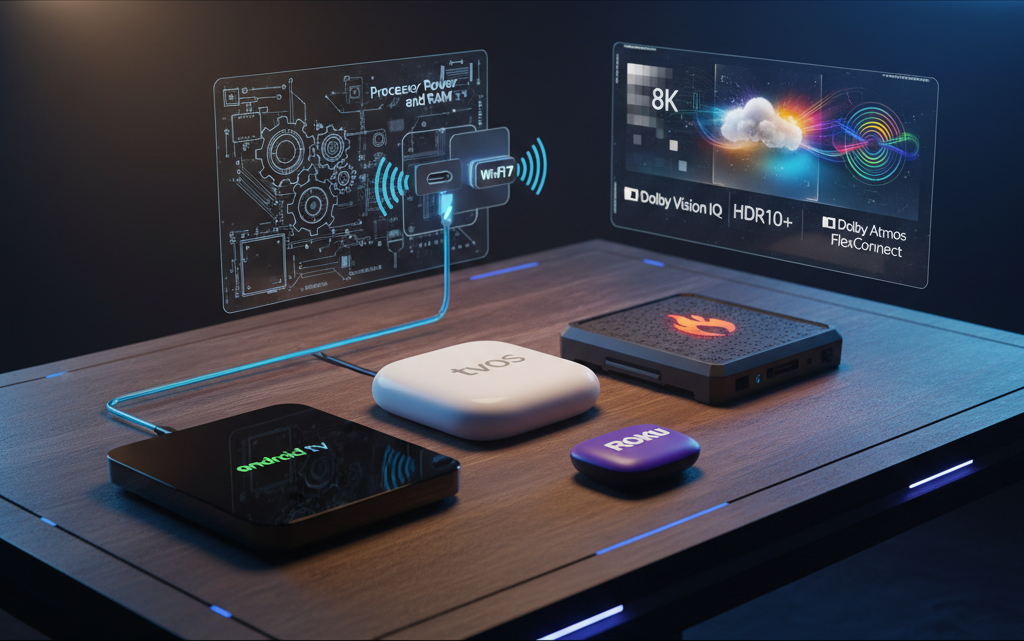
The operating system is the backbone of any smart TV box, dictating its user interface, app availability, and overall functionality. In 2026, the market is primarily dominated by a few key players. Android TV OS (now often branded as Google TV for the user interface) continues to be incredibly popular due to its open-source nature, vast app library, and deep integration with Google services. It offers unparalleled customization and flexibility, supporting a wide range of hardware.
Apple’s tvOS, found on Apple TV devices, provides a highly refined, intuitive experience, particularly for users already invested in the Apple ecosystem. It boasts strong privacy features, seamless integration with Apple Arcade, and excellent performance. Amazon’s Fire OS, based on Android, offers a content-centric interface with deep integration of Amazon Prime Video and Alexa voice control, making it ideal for Amazon ecosystem users. Roku OS remains a strong contender, known for its extreme simplicity, neutrality, and broad app support across thousands of channels. Each OS offers a distinct flavor of what is a smart TV box, catering to different user preferences and priorities.
Processor Power and RAM: The Engine of Your Entertainment
The performance of a smart TV box in 2026 is largely dictated by its internal hardware, specifically the processor (CPU and GPU) and RAM. Modern devices feature multi-core processors, often with dedicated Neural Processing Units (NPUs) for AI tasks like upscaling and voice command processing. These powerful chipsets are crucial for handling 8K video decoding, running complex apps, and delivering smooth cloud gaming experiences. For example, top-tier boxes might use custom silicon or high-end mobile chipsets, comparable to those found in flagship smartphones.
RAM, typically ranging from 4GB to 8GB or more in premium models, ensures snappy multitasking and quick app loading times. Sufficient RAM prevents lag and stuttering, especially when switching between demanding applications or streaming high-bitrate content. These specifications are vital for understanding what is a smart TV box capable of delivering a premium, future-proof entertainment experience. Without adequate processing power and RAM, even the most advanced software features would be bottlenecked.
Connectivity Standards: Wi-Fi 7, HDMI 2.1a, and USB-C
Connectivity is paramount for a smart TV box in 2026. Wi-Fi 7 (802.11be), the latest wireless standard, is increasingly common, offering significantly faster speeds, lower latency, and improved reliability over Wi-Fi 6E. This is critical for seamless 8K streaming, lag-free cloud gaming, and robust smart home communication. Ethernet ports, often 2.5 Gigabit, provide an even more stable and faster wired connection for those who demand ultimate performance.
HDMI 2.1a is the standard for video output, supporting 8K resolutions at high refresh rates, Dynamic HDR (HDR10+, Dolby Vision IQ), Variable Refresh Rate (VRR), and Auto Low Latency Mode (ALLM) for an optimized gaming experience. USB-C ports are becoming standard, offering versatility for power delivery, data transfer, and connecting peripherals like external storage or webcams. Bluetooth 5.3 enables robust connections to game controllers, headphones, and other accessories. These advanced connectivity options are essential for understanding what is a smart TV box’s ability to integrate into a modern, high-performance home theater setup.
Video and Audio Excellence: 8K, HDR10+, Dolby Vision IQ, and Atmos FlexConnect
The visual and auditory experience offered by smart TV boxes in 2026 is nothing short of breathtaking. Most high-end devices support 8K resolution, delivering incredibly sharp and detailed images, especially when combined with AI upscaling for lower-resolution content. High Dynamic Range (HDR) is a standard feature, with support for advanced formats like HDR10+ and Dolby Vision IQ. Dolby Vision IQ intelligently adjusts HDR settings based on the room’s ambient light, ensuring optimal picture quality in any environment.
On the audio front, Dolby Atmos FlexConnect is a game-changer. This technology allows for seamless integration of wireless speakers, intelligently calibrating them with the TV’s internal speakers to create an expansive and immersive surround sound experience without the need for complex wiring. DTS:X is also commonly supported for multi-dimensional audio. This commitment to delivering cutting-edge video and audio standards is a defining characteristic of what is a smart TV box today, providing an unparalleled cinematic experience at home.
User Interfaces and Voice Control Advancements
User interfaces in 2026 are sleeker, more intuitive, and highly personalized. Platforms like Google TV and Apple TV OS prioritize content discovery, presenting personalized recommendations from all your subscribed services on a single home screen, rather than just showing app icons. This shift focuses on *what to watch* rather than *where to watch it*. Customization options allow users to arrange apps, create profiles for different family members, and tailor settings to their preferences.
Voice control has moved beyond simple commands. Utilizing advanced natural language processing and AI, users can ask complex questions, search across multiple apps simultaneously, control smart home devices, and even engage in conversational interactions with their TV box. For instance, you can say, “Find action movies starring Zendaya on Netflix and then dim the living room lights,” and the box will execute both commands. This sophisticated voice interaction significantly enhances the ease of use and accessibility of what is a smart TV box.
Gaming Capabilities: Local and Cloud Gaming Integration
Gaming has become a significant differentiator for smart TV boxes. While some boxes offer respectable local gaming capabilities for casual titles, the true revolution lies in cloud gaming integration. With the advent of faster internet (Wi-Fi 7, 2.5GbE) and more powerful server infrastructure, smart TV boxes can now stream demanding AAA console and PC games with minimal latency. Services like Xbox Cloud Gaming, NVIDIA GeForce NOW, and Amazon Luna are directly accessible, turning your TV into a powerful gaming machine without the need for an expensive console.
Many boxes also support a wide array of Bluetooth game controllers, offering a console-like experience. This accessibility to high-fidelity gaming, combined with the convenience of streaming, makes gaming a core aspect of what is a smart TV box in 2026. It democratizes access to premium gaming content, opening up new entertainment avenues for a broader audience.
Navigating the Landscape: Different Types and Operating Systems
The Android TV OS Ecosystem: Flexibility and Customization
The Android TV OS ecosystem, often presented with the Google TV user interface, is arguably the most diverse and flexible among smart TV boxes in 2026. Its open-source nature allows numerous manufacturers to produce devices, leading to a wide range of hardware options from budget-friendly sticks to high-performance boxes. Key players include devices from NVIDIA, Google (Chromecast with Google TV), and various third-party brands. The primary advantage is access to the vast Google Play Store, offering hundreds of thousands of apps, including virtually every streaming service, utility, and game imaginable.
Android TV OS boxes are known for their customization options, allowing users to sideload apps, integrate with a broader array of smart home devices, and even run personal media server clients like Kodi with robust support. They often feature built-in Chromecast capabilities for easy content casting from mobile devices. This flexibility makes them a strong choice for users who want maximum control and a broad app selection, epitomizing a versatile understanding of what is a smart TV box.
Apple TV: Seamless Integration for Apple Users
Apple TV devices, running tvOS, are the premium choice for those deeply embedded in the Apple ecosystem. Characterized by sleek design, powerful processors (often recycled from older iPhones/iPads), and a highly refined user experience, Apple TV offers unparalleled integration with other Apple devices and services. This includes seamless AirPlay 2 streaming, HomeKit smart home control, and access to Apple Arcade for a curated selection of high-quality games.
The tvOS App Store, while not as vast as Google Play, offers a carefully vetted selection of apps optimized for the TV experience. Apple TV excels in privacy and security, and its performance is consistently top-tier, ensuring smooth navigation and rapid app launches. For Apple enthusiasts, the convenience of a unified ecosystem, from iCloud Photos to Apple Music and Apple Fitness+, makes the Apple TV an indispensable part of their home entertainment setup, setting a high bar for what is a smart TV box in terms of seamless integration.
Amazon Fire TV: Content-Centric Experience
Amazon’s Fire TV devices, powered by Fire OS (a fork of Android), are designed to put content at the forefront, especially content from Amazon’s own services. With deep integration of Amazon Prime Video, Amazon Music, and the Alexa voice assistant, Fire TV offers a highly personalized and convenient experience for Prime subscribers. The user interface prioritizes recommendations and quick access to streaming titles, often featuring large promotional banners for new releases.
Fire TV devices range from affordable streaming sticks to more powerful cubes with built-in smart speakers. Alexa voice control is a central feature, allowing users to search for content, control smart home devices, and even make purchases with simple voice commands. While it has access to many popular streaming apps, its primary focus remains on the Amazon ecosystem, making it an excellent choice for those who are heavy users of Amazon services and prefer an Alexa-driven experience. This content-first approach helps define what is a smart TV box from Amazon.
Roku Devices: Simplicity and Broad App Support
Roku devices stand out for their legendary simplicity and neutrality. Roku OS provides an incredibly straightforward user interface that prioritizes ease of use, making it an ideal choice for users who want minimal fuss and maximum access to content. Roku boasts one of the largest selections of “channels” (apps) in the industry, including virtually every major streaming service and countless niche content providers.
Unlike other platforms, Roku doesn’t heavily push its own content or ecosystem, offering a truly agnostic approach to streaming. Their devices range from ultra-affordable streaming sticks to more advanced boxes with 4K and HDR support. Roku’s universal search function is excellent, allowing users to find content across multiple services. For those who value ease of navigation, a vast app library without platform bias, and a simple, reliable experience, Roku defines what is a smart TV box in its most user-friendly form.
Niche and Specialized Smart TV Boxes
Beyond the mainstream players, the market for smart TV boxes also includes niche and specialized devices catering to specific needs. These can range from high-end media servers that focus on pristine local media playback, often with advanced audio processing capabilities for audiophiles, to industrial-grade boxes designed for commercial digital signage. Some specialized boxes focus on specific regional content or advanced IPTV functionalities.
For instance, devices built around the core functionalities of an Iptv Encoder Box are still relevant for specific users who wish to stream their own broadcast signals or integrate with particular IPTV services that require specialized hardware for decoding or encoding. There are also boxes designed for developers, offering more open access to the underlying Android OS for custom applications. These specialized devices highlight the diverse applications and interpretations of what is a smart TV box beyond typical consumer streaming.
Getting Started: From Unboxing to Advanced Customization
Initial Setup: Connecting and Powering Your Device
The first step after unboxing your smart TV box is physical connection. Most devices connect to your television via an HDMI cable, which typically supports both video and audio transmission. Ensure you use an HDMI 2.1a compatible cable if your box and TV support 8K or advanced HDR features to guarantee optimal performance. Plug the power adapter into the device and then into a wall outlet. Some compact devices, like streaming sticks, might draw power directly from a TV’s USB port, but a dedicated power adapter is usually recommended for stable operation.
Once connected, switch your TV to the corresponding HDMI input. The smart TV box should boot up, guiding you through the initial setup wizard. This process is designed to be user-friendly, walking you through language selection, network connection, and basic account setup. This straightforward initial connection is a fundamental part of understanding what is a smart TV box and its accessibility.
Network Configuration: Optimizing for Speed and Stability
A robust internet connection is crucial for any smart TV box, especially in 2026 with demands for 8K streaming and cloud gaming. During initial setup, you’ll connect your device to your home Wi-Fi network. If your box supports Wi-Fi 7, ensure your router is also Wi-Fi 7 compatible to take full advantage of the speed and low latency benefits. For the most demanding applications, a wired Ethernet connection is always preferred for maximum stability and speed.
Once connected, consider optimizing your network. Place your Wi-Fi router centrally and away from obstructions. If experiencing buffering or lag, check your internet speed using an app on the TV box or a connected device. You might also consider adjusting your router’s QoS (Quality of Service) settings to prioritize streaming traffic to your smart TV box. Proper network configuration is key to unlocking the full potential of what is a smart TV box.
Account Integration and App Installation
After network setup, the next step involves integrating your existing accounts. This typically means signing into your Google, Apple, or Amazon account, depending on your device’s operating system. This account links your purchases, preferences, and often synchronizes settings across devices. Once logged in, you’ll be prompted to install your favorite streaming apps. Most smart TV boxes come with pre-installed popular apps, but you’ll likely want to add others from the device’s app store.
Browse the app store for services like Netflix, Disney+, Max, Hulu, Apple TV+, YouTube, and any other specific content providers you subscribe to. Installation is usually a one-click process, and you’ll then sign into each app with your respective subscription credentials. This personalization of your app library is a core aspect of making what is a smart TV box truly yours.
Personalizing Your Home Screen and Settings
Once your essential apps are installed, take time to personalize your smart TV box’s home screen and settings. Most platforms allow you to rearrange app icons, create folders, or pin frequently used services for quick access. Google TV and Apple TV OS, in particular, offer advanced personalization features, including user profiles that remember individual viewing habits and preferences, providing tailored recommendations for each family member.
Dive into the settings menu to adjust display options (resolution, HDR settings), audio output (Dolby Atmos, DTS:X), and parental controls. Explore accessibility features if needed. Some boxes allow for custom screensavers or background images. Configuring these settings ensures your device performs optimally and provides an experience tailored to your specific needs and preferences, enhancing your interaction with what is a smart TV box.
Essential Security and Privacy Best Practices
In 2026, security and privacy are paramount for any connected device, including smart TV boxes. Always ensure your device’s operating system and all installed apps are kept up to date. Software updates often include critical security patches that protect against vulnerabilities. Use strong, unique passwords for your primary accounts (Google, Apple, Amazon) and enable two-factor authentication whenever possible.
Be mindful of the permissions requested by apps during installation. Only grant access to features (like microphone for voice control or storage for media) that are essential for the app’s functionality. Review your device’s privacy settings to control data collection and personalized ad tracking. If your smart TV box acts as a smart home hub, ensure its connection to other smart devices is secure, utilizing strong encryption and unique passwords for each. Understanding and implementing these practices is key to safely enjoying what is a smart TV box offers.
Beyond Streaming: Maximizing Your Smart TV Box Potential
Cloud Gaming Revolution: Accessing AAA Titles
The cloud gaming revolution has fundamentally changed how we perceive gaming on a smart TV box. In 2026, services like Xbox Cloud Gaming, NVIDIA GeForce NOW, and PlayStation Plus Premium allow users to stream high-fidelity AAA games directly to their television without owning a dedicated console. The processing power resides in remote data centers, and your smart TV box simply streams the video and sends your controller inputs. This means you can play graphically intensive games with stunning visuals and minimal latency, provided you have a fast and stable internet connection (Wi-Fi 7 or wired Ethernet is highly recommended).
Many smart TV boxes are optimized for cloud gaming, offering low-latency processing and support for a wide range of Bluetooth controllers. This capability transforms your living room into a versatile gaming arena, expanding the definition of what is a smart TV box to include a powerful, subscription-based gaming console. It’s an incredibly cost-effective way to access a vast library of games.
Smart Home Hub Integration: Controlling Your Connected Devices
Modern smart TV boxes are increasingly acting as central hubs for the smart home. With the widespread adoption of new interoperability standards like Matter and Thread in 2026, these devices can seamlessly connect and control a diverse ecosystem of smart lights, thermostats, door locks, security cameras, and other IoT devices. For example, you can use voice commands via your smart TV box to adjust the temperature, arm your security system, or view a live feed from your doorbell camera directly on your TV screen.
Platforms like Apple TV (HomeKit), Google TV (Google Home), and Amazon Fire TV (Alexa) offer robust integration, allowing you to manage your smart home devices through a unified interface. This convergence of entertainment and home automation elevates what is a smart TV box to a truly central role in the connected household, providing convenience and control from the comfort of your couch. For more on smart home trends, Forbes discusses AI and IoT transforming smart homes.
Personal Media Servers: Plex and Kodi in 2026
For users with extensive personal media libraries, smart TV boxes continue to be excellent clients for personal media server software like Plex and Kodi. In 2026, these platforms offer even more refined experiences. Plex allows you to organize your movies, TV shows, music, and photos on a central server (e.g., a home computer or NAS drive) and stream them beautifully to your smart TV box, complete with rich metadata, cover art, and synopsis. It supports transcoding on the fly, ensuring compatibility with virtually any device.
Kodi, an open-source media center, offers unparalleled customization and flexibility. It can play almost any media format and is highly extensible with add-ons for various functionalities, from streaming niche content to displaying weather forecasts. Both Plex and Kodi provide a powerful way to consolidate and enjoy your entire media collection, transforming what is a smart TV box into a personalized entertainment archive. Their continued evolution ensures they remain relevant for media enthusiasts.
Productivity and Communication Apps
While primarily entertainment devices, many smart TV boxes in 2026 also support a range of productivity and communication apps. With the ability to connect Bluetooth keyboards, mice, and even webcams, your television can become a large-screen monitor for basic computing tasks. Apps like Google Docs, Microsoft Office web versions, and various note-taking tools can be accessed via web browsers or dedicated apps.
Video conferencing apps like Google Meet or Zoom are increasingly available, allowing for family video calls or even remote work meetings from your living room. This expands the utility of what is a smart TV box beyond leisure, making it a more versatile appliance in the modern home. The lines between entertainment, communication, and productivity continue to blur.
Advanced Casting and Screen Mirroring Technologies
Smart TV boxes excel in casting and screen mirroring capabilities, making it easy to share content from your mobile devices or computer onto the big screen. Technologies like Google Chromecast (built into Android TV OS devices), Apple AirPlay 2 (on Apple TV), and Miracast (on many Android-based devices) allow for seamless wireless projection. You can cast videos, photos, music, or even mirror your entire device screen.
In 2026, these technologies are more robust and lower latency than ever, supporting higher resolutions and smoother playback. This is particularly useful for sharing vacation photos with family, presenting work documents, or playing mobile games on a larger display. The ability to effortlessly transition content from a small screen to a large one is a key convenience feature that defines what is a smart TV box’s adaptability and user-friendliness.
Choosing the Right Device: Beyond Just Knowing What Is a Smart TV Box
Budget vs. Performance: Finding Your Sweet Spot
When selecting a smart TV box in 2026, striking the right balance between budget and performance is crucial. Entry-level streaming sticks, often priced under $50-$70, are excellent for basic HD or 4K streaming of popular services. They are perfect for secondary TVs or users with simpler needs. However, they may lack the processing power for seamless cloud gaming, advanced AI upscaling, or extensive smart home integration.
Mid-range boxes, typically $80-$150, offer a significant jump in performance, often supporting 4K HDR, faster Wi-Fi 7, and smoother navigation. They are a great all-rounder for most users. Premium devices, costing $180-$300+, provide top-tier processors, 8K support, dedicated NPUs for AI, advanced audio/video codecs, and robust smart home capabilities. These are for enthusiasts who demand the absolute best performance and future-proofing. Your budget should align with your specific usage requirements, helping you decide what is a smart TV box that fits your financial and performance expectations.
Ecosystem Preference: Apple, Google, or Amazon?
Your existing digital ecosystem plays a significant role in choosing the right smart TV box. If you’re an Apple user with an iPhone, iPad, and Mac, an Apple TV device will offer the most seamless integration with AirPlay 2, HomeKit, Apple Arcade, and iCloud services. The user experience will feel instantly familiar and intuitive.
For Android smartphone users or those heavily invested in Google services (Gmail, YouTube, Google Photos), an Android TV OS device (like a Chromecast with Google TV or NVIDIA Shield TV) will provide deep integration with Google Assistant, casting capabilities, and access to the vast Google Play Store. If you’re an Amazon Prime subscriber, use Alexa for smart home control, and frequently purchase content from Amazon, then an Amazon Fire TV device will provide the most tailored and convenient experience. Your ecosystem preference is a fundamental consideration when determining what is a smart TV box that will best integrate into your digital life.
Future-Proofing: What to Look for in 2026 and Beyond
To future-proof your smart TV box purchase in 2026, look for several key specifications. Start with support for 8K resolution and advanced HDR formats like Dolby Vision IQ and HDR10+. While 8K content is still emerging, having the capability ensures your device is ready for the next generation of visual fidelity. Wi-Fi 7 connectivity is essential for high-bandwidth streaming and low-latency cloud gaming.
HDMI 2.1a with features like VRR and ALLM is crucial for gamers. A powerful multi-core processor with a dedicated NPU for AI upscaling and advanced voice control will ensure smooth performance and access to future AI-driven features. Finally, look for support for emerging smart home standards like Matter and Thread, which guarantee broad compatibility with upcoming smart home devices. Investing in these technologies now means your understanding of what is a smart TV box will remain current for years to come.
Specific Feature Needs: Gaming, AI Upscaling, or Smart Home Control
Consider your primary use cases beyond basic streaming. If cloud gaming is a priority, choose a box with a powerful processor, ample RAM, Wi-Fi 7, and HDMI 2.1a support for the best low-latency experience. Devices like the NVIDIA Shield TV Pro continue to be top contenders for gaming enthusiasts. If you have an older 4K TV and want to make lower-resolution content look better, prioritize a box with a strong NPU for AI-driven upscaling. This can dramatically improve the visual quality of older movies or standard-definition broadcasts.
For users who want a central hub for their smart home, ensure the smart TV box has robust integration with your preferred smart home ecosystem (Apple HomeKit, Google Home, Amazon Alexa) and supports Matter/Thread. Some boxes even include built-in smart speakers. Identifying these specific feature needs will guide you toward what is a smart TV box that truly meets your unique requirements.
Reading Reviews and Community Feedback
Before making a final decision, always read comprehensive reviews from reputable tech publications and consult community feedback. Reviews can offer insights into real-world performance, user interface nuances, and potential quirks that specifications alone might not reveal. Look for reviews that specifically test the features most important to you, such as cloud gaming latency, AI upscaling quality, or smart home integration reliability.
Community forums and user reviews can provide valuable long-term perspectives on software update frequency, customer support, and common issues. Pay attention to comments regarding system stability, app compatibility, and overall user satisfaction. Combining expert analysis with user experiences will provide a well-rounded understanding of what is a smart TV box’s strengths and weaknesses, helping you make an informed purchase. You can often find detailed product comparisons and user experiences on platforms like Wikipedia’s page on Streaming Media Players.
The Evolving Role of Smart TV Boxes in the Digital Home of Tomorrow
AI-Driven Content Curation and Personalization
The future of smart TV boxes is deeply intertwined with advancements in artificial intelligence. In the coming years, AI will move beyond simple recommendations to truly predictive and proactive content curation. Your smart TV box will not only suggest content based on your viewing history but will also anticipate your mood, time of day, and even external factors like local weather, offering highly personalized entertainment suggestions. It will seamlessly integrate content from all your subscriptions, local media, and even live broadcasts into a single, cohesive feed.
AI will also power more sophisticated contextual search, allowing users to ask natural language questions like, “Show me all sci-fi movies released last year with a female lead that I haven’t watched yet,” across all available services. This level of intelligent personalization will make the experience of what is a smart TV box incredibly intuitive and user-centric, truly feeling like a personal entertainment assistant. This trend is a significant leap from the basic recommendation engines of the past.
Deeper Smart Home Automation with Matter and Thread
The ongoing evolution of smart home standards like Matter and Thread is set to solidify the smart TV box’s role as a central smart home hub. In 2026 and beyond, these protocols will ensure seamless interoperability between devices from different manufacturers, simplifying setup and control. Your smart TV box will become the primary interface for managing your entire connected home, allowing for complex automation routines triggered by voice commands, schedules, or even the content you’re watching.
Imagine pausing a movie and your smart TV box automatically dimming the lights, closing the blinds, and adjusting the thermostat for optimal comfort. Or receiving a notification from your smart doorbell and viewing the live feed directly on your TV without interrupting your show. This deeper integration with the smart home ecosystem will dramatically expand the utility and convenience of what is a smart TV box, making it an indispensable component of the intelligent home.
New Immersive Media Formats and Technologies
The relentless pursuit of more immersive media experiences will continue to drive innovation in smart TV boxes. Expect to see enhanced support for advanced spatial audio formats, going beyond Dolby Atmos to even more intricate soundscapes that adapt to room acoustics and listener position. Virtual reality (VR) and augmented reality (AR) integration may also begin to emerge, allowing for interactive experiences that blend digital content with the physical environment, perhaps through connected headsets or advanced camera systems.
Holographic displays and light field technology, while still nascent, could eventually influence how content is delivered, and smart TV boxes will need to support these next-generation visual formats. The continuous development of display technologies and immersive audio means that what is a smart TV box will need to remain at the cutting edge to deliver these future experiences effectively.
Sustainability and Power Efficiency Innovations
As environmental concerns grow, sustainability and power efficiency will become increasingly important considerations for smart TV box manufacturers. Expect devices to be designed with more energy-efficient components, consuming less power in active use and in standby modes. Manufacturers will likely focus on using recycled materials, minimizing electronic waste, and offering longer software support to extend product lifecycles.
Packaging will become more eco-friendly, and there might be greater emphasis on modular designs that allow for component upgrades rather than full device replacement. These initiatives will ensure that what is a smart TV box is not only technologically advanced but also environmentally responsible, aligning with broader consumer and industry trends towards a greener future.
The Convergence of Entertainment and Connectivity
The ultimate future of smart TV boxes lies in the complete convergence of entertainment, connectivity, and digital lifestyle services. They will increasingly blur the lines between a media player, a gaming console, a smart home hub, and a communication device. Your smart TV box might seamlessly integrate with your car’s infotainment system, your wearable tech, and even your digital health platforms, providing a truly holistic digital experience.
Personalized content will be available everywhere, adapting to the screen and context. The smart TV box will act as the orchestrator of your digital life, learning your habits, anticipating your needs, and providing a unified portal to all your connected services. This deep integration will redefine our understanding of what is a smart TV box, transforming it into a central nervous system for the modern, connected individual and household.
The Future of Home Entertainment: Recapping What Is a Smart TV Box
Summary of Key Benefits and Features
In summary, a smart TV box in 2026 is a sophisticated, multi-functional device that transcends simple streaming. Its key benefits include upgrading older TVs with cutting-edge capabilities like 8K resolution, Wi-Fi 7, and HDMI 2.1a; providing access to a vast, continually updated app ecosystem; and offering superior performance compared to many integrated smart TV systems. These devices are powered by advanced operating systems like Android TV OS, tvOS, Fire OS, and Roku OS, each offering unique advantages.
Core features encompass high-fidelity video and audio (HDR10+, Dolby Vision IQ, Atmos FlexConnect), seamless cloud gaming, intuitive AI-driven voice control, and deep smart home integration through standards like Matter and Thread. They also serve as excellent clients for personal media servers and offer advanced casting technologies. This comprehensive suite of features ensures a rich, personalized, and future-proof entertainment experience, making the smart TV box a cornerstone of the modern digital home.
The Enduring Value of Smart TV Boxes in 2026
The enduring value of smart TV boxes in 2026 lies in their adaptability, upgradeability, and specialized performance. They empower consumers to extend the life of their existing televisions, providing a cost-effective path to access the latest technological advancements without purchasing an entirely new display. Their dedicated hardware and optimized software often deliver a smoother, more responsive, and feature-rich experience than built-in smart TV platforms.
Furthermore, their role as central hubs for smart home automation and cloud gaming positions them as indispensable components of the interconnected digital lifestyle. As technology continues to evolve rapidly, the ability of smart TV boxes to quickly adopt new standards, codecs, and AI functionalities ensures they remain at the forefront of home entertainment innovation. This flexibility and power secure their place as a vital entertainment component.
Final Thoughts on Their Place in the Connected Future
Looking ahead, the smart TV box is poised to evolve even further, becoming an increasingly intelligent and integrated component of our digital lives. Its convergence with smart home systems, AI-driven personalization, and immersive media formats will redefine how we interact with content and our living spaces. As connectivity becomes ubiquitous and AI more sophisticated, the smart TV box will act as a seamless orchestrator, anticipating our needs and delivering tailored experiences. The question of what is a smart TV box will continue to expand in scope, encompassing not just entertainment but a broader array of digital services, firmly establishing its place as a cornerstone of the connected future.